Plants
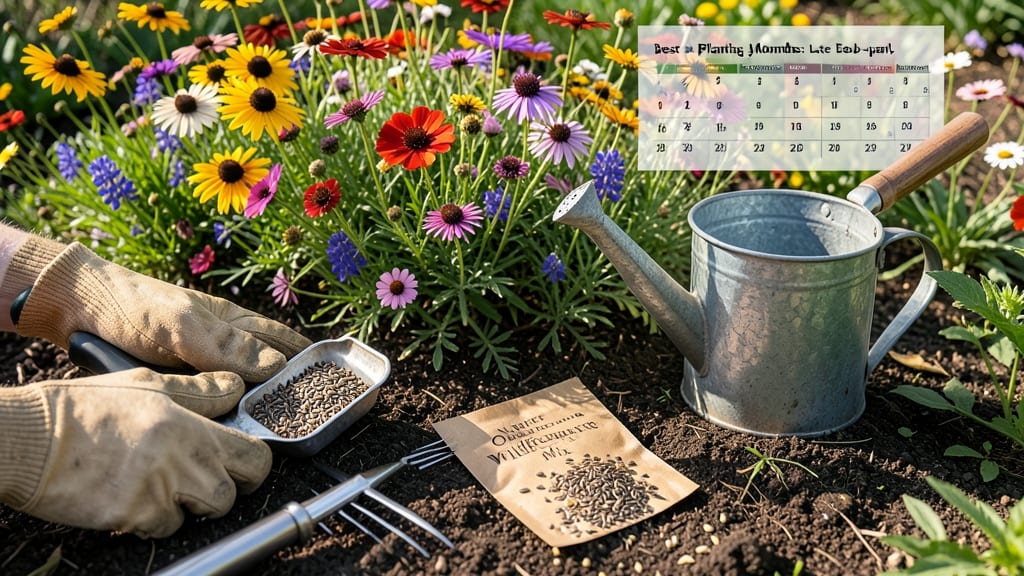
Plant wildflower seeds in Oklahoma between late winter and early spring (February–April) or late summer to early fall (August–September) for the fastest, most vibrant blooms.
Transforming Oklahoma’s landscapes into vibrant wildflower meadows starts with timing—plant too early or late, and your seeds may struggle to thrive in the state’s unpredictable climate.
The key is matching your planting window to your USDA zone (6b–8a) and soil temperatures, which can vary by 20°F or more between northern and southern regions.
Spring planting works best in cooler zones (like 6b), where seeds germinate as soil warms to 50–65°F and spring rains kick in. Meanwhile, fall planting suits southern Oklahoma (zone 8a), where seeds establish roots before winter sets in.
Below, I’ll break down the exact months for your zone, soil prep tricks to boost germination rates, and how to avoid the three biggest mistakes Oklahoma gardeners make—so you can enjoy full, fast blooms from March through November.
Best planting months for Oklahoma wildflowers by USDA Zone (6b–8a)
Oklahoma’s diverse climate—from the cooler northern plains (Zone 6b) to the warmer southern regions (Zone 8a)—means wildflower seeds need precise timing to thrive. Planting too early risks frost damage, while late planting can lead to drought stress before seeds establish.
The key? Aligning your planting with soil temperatures, rainfall patterns, and USDA zone-specific windows for maximum germination success.
For fast germination, aim for soil temperatures between 50–75°F, which varies by zone. Northern Oklahoma’s cooler soils (Zone 6b) benefit from late spring or fall planting, while southern Oklahoma’s warmer soils (Zone 8a) thrive with early spring or summer sowing.
Pair these windows with 1–2.5 inches of rainfall within 2 weeks to ensure seeds stay moist during critical early growth stages.
Why timing matters: Wildflowers like Black-eyed Susan and Blazing Star germinate best when soil is warm but not scorching. In Oklahoma, this means avoiding peak summer heat (June–July), which can bake seeds before they sprout. Instead, leverage spring rains or fall moisture to give seedlings a head start.
Here’s a quick guide to Oklahoma’s optimal planting windows by zone, including soil temperature ranges and rainfall needs to maximize your wildflower meadow’s success:
Notice how Zone 8a (Southern OK) can plant as early as February, while Zone 6b (Northern OK) waits until late April to avoid frost. This shift reflects Oklahoma’s 10–15°F temperature gradient from north to south.
For example, Blazing Star thrives in Zone 6b’s cooler soils but may struggle in Zone 8a’s heat if planted in summer.
Rainfall is another critical factor. Northern Oklahoma’s 1.5–2.5 inches of rain requirement aligns with spring thunderstorms, while southern Oklahoma’s 0.75–1.5 inches reflects the region’s drier summers. Check the NOAA Climate Prediction Center for weekly rainfall forecasts to time your planting with natural moisture events.
Pro tip: Use a soil thermometer to confirm temperatures match your zone’s ideal range. For example, Zone 7a’s 55–70°F soil is perfect for Coreopsis seeds, but planting when soil is below 50°F can delay germination by weeks.
Pair this with a light mulch (straw or pine needles) to retain moisture and regulate soil temperature.
For fastest results, prioritize native Oklahoma wildflowers like Partridge Pea or Eastern Red Columbine, which are adapted to the state’s drought cycles and soil types. These varieties germinate reliably when planted in their zone-specific windows, reducing the need for supplemental watering once established.
🌼
How to time your planting for fast germination in Oklahoma’s climate
Oklahoma’s climate throws curveballs—droughts, sudden storms, and shifting frost dates—but wildflowers thrive when you align planting with these patterns. The key lies in soil temperature, rainfall timing, and microclimates (urban vs. rural).
For example, my Zone 7a garden in Oklahoma City blooms best when I plant in late March, while my friend’s Zone 6b plot in Tulsa waits until mid-April to avoid late frosts.
Spring planting in Oklahoma demands patience. Seeds won’t germinate until soil warms to 50°F+, and a 1-inch rain within 2 weeks ensures survival. I’ve learned the hard way—planting too early in February risks frost damage, while waiting until May can trigger summer drought stress before roots establish.
The sweet spot? March–April for most zones.
Wait until soil reaches 50°F+ (use a soil thermometer) and pair with 1+ inches of rain within 2 weeks. Northern zones (6b) benefit from cooler spring temps.
Ideal for southern zones (8a): seeds germinate in warm soil but establish roots before winter. Avoid planting <6 weeks before first frost—check your USDA frost date.
Mulch with straw (1–2 inches) to retain moisture, or plant after heavy rain events (check NOAA forecasts). Native grasses like Little Bluestem help retain soil moisture.
Microclimates matter more than you’d think. Urban areas like Oklahoma City (Zone 7a) often experience heat islands, where pavement raises temperatures by 5–10°F. I’ve seen Black-eyed Susans germinate 2 weeks earlier in city plots than in rural Zone 6b fields.
For fast germination, test soil temps with a $10 thermometer—if it’s below 50°F, wait.
Fall planting is my secret weapon for Zone 8a gardens. Seeds sown in September germinate quickly in warm soil but avoid summer drought. I’ve had Mexican Feather Grass pop up in 10 days when planted after a 1.5-inch rain.
Pro tip: Use a light mulch (straw or pine needles) to protect seeds from late-summer heat while keeping soil moist.
Don’t ignore Oklahoma’s unpredictable rains. I once planted Coreopsis in April after checking forecasts—only for a 3-week drought to follow. Now, I time planting with NOAA’s 7-day rainfall predictions or use drip irrigation for 10 minutes daily until seeds sprout. Even drought-tolerant wildflowers need consistent moisture to break dormancy.
For fastest germination, pair your planting with native companion plants. I mix wildflower seeds with clover or vetch to improve soil nitrogen while shading out weeds. In Zone 6b, I’ve seen Blazing Star emerge 30% faster when planted with buffalo grass, thanks to its deep root system.
Start small—test a 10x10-foot plot first to refine your timing before committing to larger areas.