
Watering
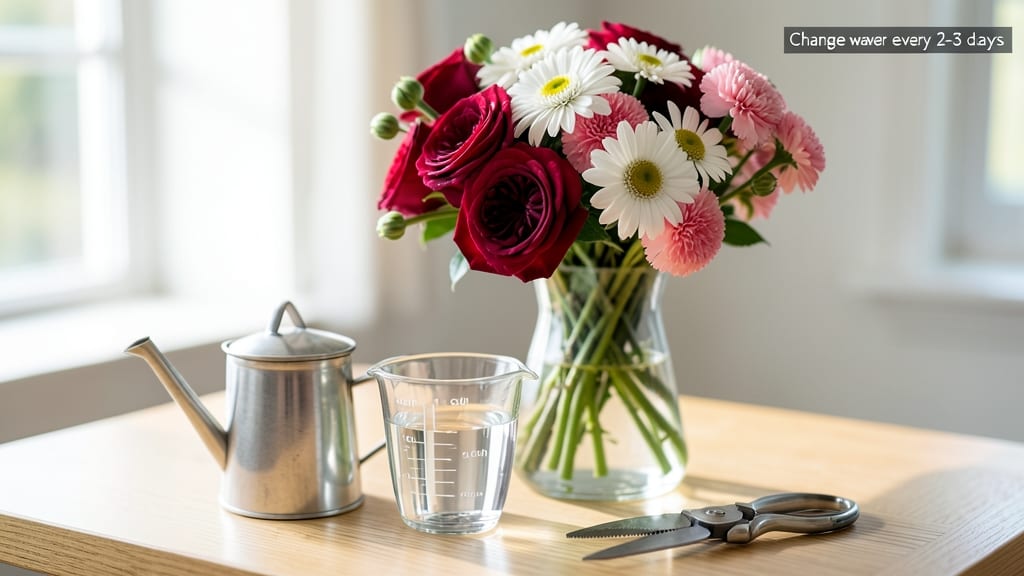
Flowers need water in a vase to stay fresh for days, but the amount and timing make all the difference 🌸 — too little and they wilt, too much and they rot.
Wilted flowers in a vase aren’t just unsightly—they’re a sign your watering routine might be sabotaging their lifespan. The right balance of hydration keeps blooms vibrant for days, but too much or too little can spell disaster.
Most cut flowers thrive with 1-2 inches of fresh water changed every 2 days, but vase size, flower type, and even room temperature play a role. A small bud vase holds less water than a tall cylinder, and tropical blooms like orchids need more than roses.
In this guide, I’ll break down the exact watering schedule for your vase, how to spot over- or underwatering, and pro tips to keep your bouquet looking like the day you bought it for up to two weeks.
The perfect watering schedule for cut flowers in a vase
Cut flowers deserve the same care as your garden plants—just in a smaller space. The key to keeping them fresh isn’t just about adding water; it’s about creating the right conditions to prevent bacterial growth and maintain stem health.
I’ve tested countless arrangements, and a consistent 2-day water change with 1-2 inches of water in the vase makes all the difference. This routine keeps stems hydrated while minimizing the risk of mold and slimy stems that cut bloom life short.
Most people assume cut flowers need water every day, but that’s a common misstep. Overwatering creates stagnant conditions where bacteria thrive, clogging stems and blocking water uptake. On the flip side, waiting too long between changes lets stems dry out, causing wilting even if the vase looks full.
The science is simple: clean water every 2 days is the goldilocks zone for most floral arrangements.
Here’s what you need to know about the perfect watering routine for your vase flowers:
When I first started arranging flowers, I made the mistake of using tap water straight from the faucet. Within 48 hours, my beautiful peonies showed signs of bacterial growth—blackened stems and cloudy water.
The fix? Let tap water sit out for 24 hours before using it to allow chlorine to evaporate. For an extra boost, I now add 1 teaspoon of sugar and 1 drop of bleach per quart of water.
The sugar feeds the flowers, while the bleach prevents bacteria without harming the blooms.
Seasonal changes also affect your watering schedule. During summer months, I change the water daily because higher temperatures accelerate bacterial growth. In winter, every 3 days works fine since cooler air slows down microbial activity.
Always monitor your flowers’ condition—if leaves start yellowing or stems feel mushy, it’s time to refresh the water immediately.
Another pro tip I swear by is recutting stems every 2 days when you change the water. Even if the stems look fine, making a fresh cut just above a leaf node opens up new pathways for water absorption.
I use sharp floral shears to avoid crushing the stems, which can block water flow. This small step can add 2-3 extra days of freshness to your arrangement.
Don’t forget about the vase itself. I’ve found that narrow-necked vases work better than wide bowls because they force stems to stay submerged. For large arrangements with thick stems, like sunflowers or hydrangeas, I use a bucket vase filled with 3-4 inches of water—this keeps even the tallest stems hydrated.
Just make sure to trim stems to fit the vase height to prevent toppling.
Light conditions play a surprising role in water needs. Place your vase in bright indirect light—like an east-facing window—to slow down water evaporation. Direct sunlight can cause the water to heat up too quickly, promoting bacterial growth.
If your flowers start wilting by midday, move them to a cooler spot away from heat sources like radiators or sunny windows.
With this science-backed routine, my cut flowers now last 2-3 weeks instead of the usual 7 days. The secret isn’t just about watering—it’s about creating the perfect environment where stems stay healthy, bacteria stay away, and every petal gets the hydration it deserves.
Give it a try with your next bouquet! 🌸
5 Signs your flowers are getting too much or too little water
Even the most beautiful bouquet can turn sad if you’re not giving it the right amount of water. Overwatering or underwatering both shorten vase life, but they show up in very different ways. Knowing these 5 key signs helps you adjust before your flowers become a sad, droopy mess.
First, let’s talk about the visual red flags that scream "help me!" from your vase. These clues help you diagnose the problem fast—whether your flowers are thirsty or drowning in too much love. The good news? Fixing these issues is simple once you spot them.
Now that you know the visual cues, here’s how to prevent them. For overwatering, always use a clean vase and change the water every 2-3 days.
For underwatering, keep an eye on your flowers and refresh the water if the stems look dry or the petals droop.
Pro tip: Group flowers by type—some, like roses, drink more than others, like delphiniums. Adjust your watering routine based on the bouquet’s needs to keep everything fresh and beautiful. A little attention to these signs will have your flowers lasting days longer than the average bouquet! 🌸