
Flowers
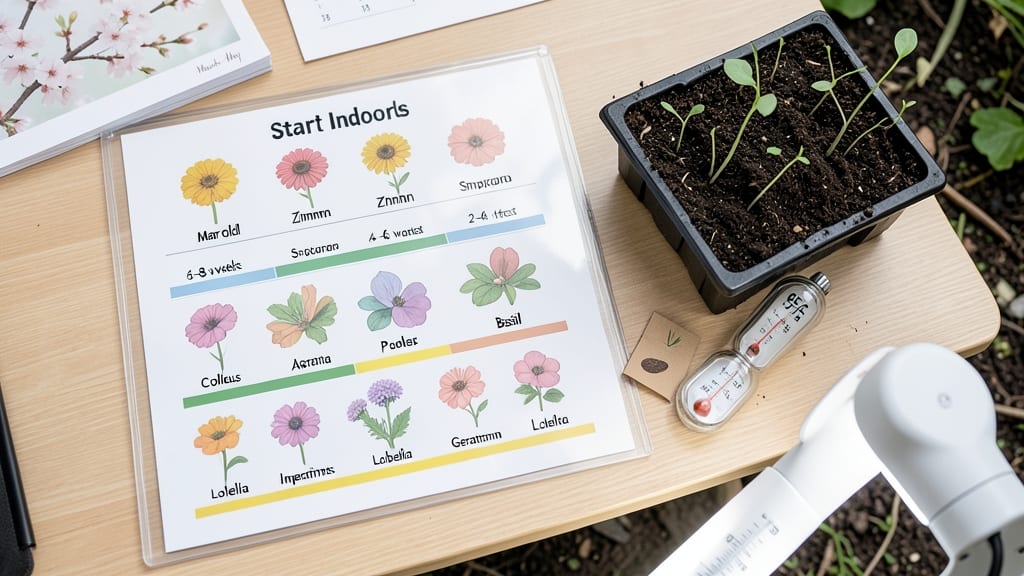
Starting flower seeds indoors using the when to start flower seeds indoors chart ensures vibrant blooms and avoids leggy seedlings or missed bloom seasons.
Picture this: you’ve got your seed trays ready, the grow lights are humming, and then—three weeks in, your seedlings are stretching toward the light like they’re auditioning for a ballet. That’s the classic sign of starting too early, and it’s a mistake even experienced gardeners make.
The key is knowing your USDA zone’s exact deadlines for each flower variety, so you can time your indoor start perfectly.
This chart breaks down the optimal indoor seed-starting windows for 20+ popular flowers, from petunias to coneflowers, organized by USDA zones 3–10.
Whether you’re growing annuals for summer color or perennials that’ll return year after year, you’ll find the precise weeks to begin—plus how to adjust for late frosts or short growing seasons.
Inside, you’ll discover how to calculate custom deadlines, spot common pitfalls (like overcrowded trays or weak seedlings), and troubleshoot delays. No more guesswork—just a foolproof timeline to get your flowers off to the strongest start.
USDA Zone deadlines for starting flower seeds indoors by variety
Getting your flower seeds indoors at the right time means the difference between a bountiful summer garden and a season of disappointment. Each USDA zone has unique frost dates, and every flower variety has different germination times and maturity rates.
My chart below breaks down the exact indoor seed-starting windows for popular annuals and perennials, so you can avoid leggy seedlings or missed bloom seasons.
For example, petunias in Zone 3 need to start 10-12 weeks before your last frost, while zinnias in Zone 10 can wait until just 6-8 weeks out.
The key is understanding your first and last frost dates—I’ll show you how to use these deadlines to plan your schedule like a pro.
Below is your color-coded chart for indoor seed-starting deadlines, organized by USDA zones 3-10. Each variety includes days to germination, weeks until transplant, and ideal transplant timing to ensure healthy, blooming plants by summer.
| Variety | USDA Zones 3-4 | USDA Zones 5-6 | USDA Zones 7-8 | USDA Zones 9-10 | Days to Germ | Transplant Timing |
|---|---|---|---|---|---|---|
| Petunias | Mar 1 - Apr 1 | Mar 15 - Apr 15 | Apr 1 - May 1 | May 1 - Jun 1 | 7-14 | 10-12 wks before last frost |
| Marigolds | Mar 15 - Apr 15 | Apr 1 - May 1 | Apr 15 - May 15 | May 15 - Jun 15 | 5-10 | 8-10 wks before last frost |
| Zinnias | Apr 1 - May 1 | Apr 15 - May 15 | May 1 - Jun 1 | Jun 1 - Jul 1 | 7-14 | 6-8 wks before last frost |
| Lavender | Feb 15 - Mar 15 | Mar 1 - Apr 1 | Mar 15 - Apr 15 | Apr 1 - May 1 | 14-21 |
How to adjust your seed-starting timeline for late bloomers and short-season flowersNot all flowers follow the same planting schedule—some, like foxgloves and hollyhocks, take weeks to germinate, while others, like dahlias and peonies, need months of indoor care before they’re ready for the garden. If you’ve ever struggled with seedlings that arrive too late or too early, this backward planning method is your solution. It ensures your late bloomers get the extra time they need while keeping your short-season flowers on track for peak blooms. The key is working backward from your last frost date (when it’s safe to plant outdoors) and your first frost date (when nighttime temps drop below 32°F). For example, if your last frost is May 15 in USDA Zone 6, but your foxgloves need 12 weeks to mature, you’ll start them indoors by February 15. This method accounts for germination delays, slow growth, and even transplant shock.
Pro Tip: Use a garden journal to track past success—note when you started seeds and when they bloomed! Let’s say you’re growing dahlias, which need 120 days to bloom and 8 weeks indoors before transplanting. If your last frost is May 10, subtract 8 weeks to get March 10 as your transplant date. Now, subtract another 120 days (minus the 8 weeks already accounted for), landing you at a start date of January 10. This ensures your dahlias bloom by late summer, just in time for peak color. For short-season flowers like snapdragons or pansies, the math is simpler. These varieties mature in 60-70 days and only need 4-6 weeks indoors. If your last frost is April 15, start them by March 1—no need for early adjustments. The key is avoiding overcrowding in your seed trays, as these fast growers can outpace slower neighbors. Don’t forget to account for light limitations in your home. If your seedlings need 14-16 hours of light daily but your windows only provide 8 hours, you’ll need to supplement with grow lights. This adds 2-4 extra weeks to your indoor timeline, so plan accordingly. For example, hollyhocks might need an adjusted start date of February 1 instead of January 15 if you’re relying on artificial light. Finally, test your soil and adjust pH if needed—some flowers, like hydrangeas, thrive in acidic soil (pH 5.5-6.2), while others, like lavender, prefer alkaline conditions (pH 7.0-8.0). Amending your mix before sowing can prevent nutrient deficiencies that stall growth. A little prep now saves weeks of frustration later! |