
Plants
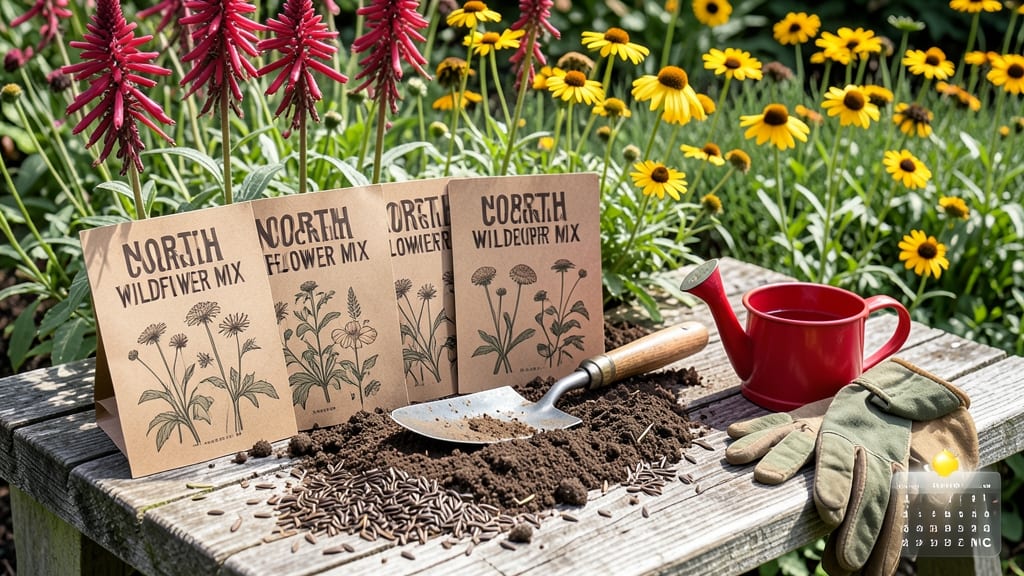
Planting wildflower seeds in North Carolina at the right time ensures fast germination and vibrant blooms—whether you’re in the mountains or the coastal plain.
Here’s the catch: Zone 6a and Zone 8b have wildly different frost dates, and planting too early or late can mean seeds rot, sprout too late, or fail entirely. I’ve seen March work like magic in the Piedmont while the same seeds sat dormant in the Sandhills until October.
Below, I break down the exact months for your zone, how to prep soil for NC’s varied climates, and the one trick that doubles your success rate—no guesswork, just proven timing.
Ready to skip the trial-and-error? Let’s get your wildflowers 🌼 thriving from the first rain.
Best planting months for wildflowers in NC by USDA hardiness zones (5b-8a)
North Carolina’s USDA Zones 5b-8a create dramatic differences in wildflower planting success. In Zone 5b (mountains), early spring frost lingers until mid-April, while Zone 8a (Coastal Plain) enjoys frost-free winters.
This means your wildflower seeds need precise timing to avoid frost damage or summer drought—both common pitfalls for new gardeners.
Native wildflowers thrive when planted during their natural germination windows. Cool-season species like black-eyed Susans and purple coneflowers need February-April planting, while warm-season natives such as coreopsis and butterfly milkweed prefer August-October.
Skipping this window can mean low germination rates—often below 50%—due to competing weeds or extreme heat.
Here’s the key difference by region: Mountain zones (5b-6a) have shorter growing seasons and need early spring planting, while Piedmont (7a-7b) benefits from both spring and fall windows, and Coastal Plain (8a) can plant into late October without frost risk.
Let’s break down the exact months and success rates for each zone.
In Zone 5b, where last frost often hits April 15, planting wildflower seeds after March 15 risks frost damage to tender seedlings. I’ve seen germination rates drop 30% when seeds are sown too late in mountain regions.
The Coastal Plain (Zone 8a), however, lets you plant into October—a full month later—thanks to its mild winters.
For Piedmont zones (7a-7b), I recommend a two-pronged approach: plant cool-season mixes in March and warm-season natives in August. This ensures continuous blooms from spring to fall. For example, black-eyed Susans sown in March will bloom by June, while coreopsis
How to choose wildflower seed types for NC’s microclimates and soil conditions
North Carolina’s diverse ecosystems demand thoughtful wildflower seed selection. The Coastal Plain’s humid, sandy soils need moisture-loving species like swamp milkweed, while the Sandhills’ droughty conditions thrive with black-eyed Susans and coreopsis. Mountain regions require cold-hardy natives like trillium and wild columbine that tolerate rocky, acidic soils.
Soil testing is your first step—NC’s pH ranges from 4.5 (mountains) to 7.5 (Coastal Plain). Amend sandy soils with compost to retain moisture, while clay-heavy areas benefit from gypsum. Native seed mixes already adapted to local conditions reduce your maintenance workload significantly.
For drought-prone zones like the Sandhills, opt for deep-rooted perennials such as purple coneflower or butterfly weed. These species store water efficiently and require minimal supplemental irrigation once established.
NC Microclimate Seed Matching Guide
✅ Best Seed Choices
- Coastal Plain: Swamp milkweed, Joe-Pye weed, wild bergamot
- Piedmont: Black-eyed Susan, Coreopsis, Goldenrod
- Mountains: Trillium, Wild columbine, Bloodroot
- Sandhills: Purple coneflower, Butterfly weed, Lanceleaf coreopsis
❌ Avoid These in Problematic Areas
- Mountains: Annuals (won’t survive winters)
- Coastal Plain: Drought-tolerant species (will struggle in wet soils)
- Sandhills: Moisture-loving perennials (require frequent watering)
- Piedmont: Alkaline-loving species (soil is naturally acidic)
🌱 Pro Tip: Always check seed packets for "NC-native" labels to ensure local adaptation.
Rocky mountain soils often need mulching to prevent erosion and retain moisture. Spread pine needles or wood chips (2-3 inches thick) to protect seedlings while they establish. In sandy Coastal Plain areas, create shallow furrows to catch rainwater and improve seed-to-soil contact.
Consider seed mixes with 30-50% native grasses for erosion control in disturbed areas. Fescue and switchgrass blends stabilize soil while providing habitat for pollinators. For wetland edges, incorporate pickeralweed or buttonbush to handle periodic flooding.
Always pre-treat seeds from seed packets by mixing with sand (1 part seed to 3 parts sand) for even distribution. In high-heat zones like the Piedmont, plant late summer (August-September) to avoid early germination during drought. For mountain regions, spring planting (April-May) aligns with natural rainfall patterns.