Flowers
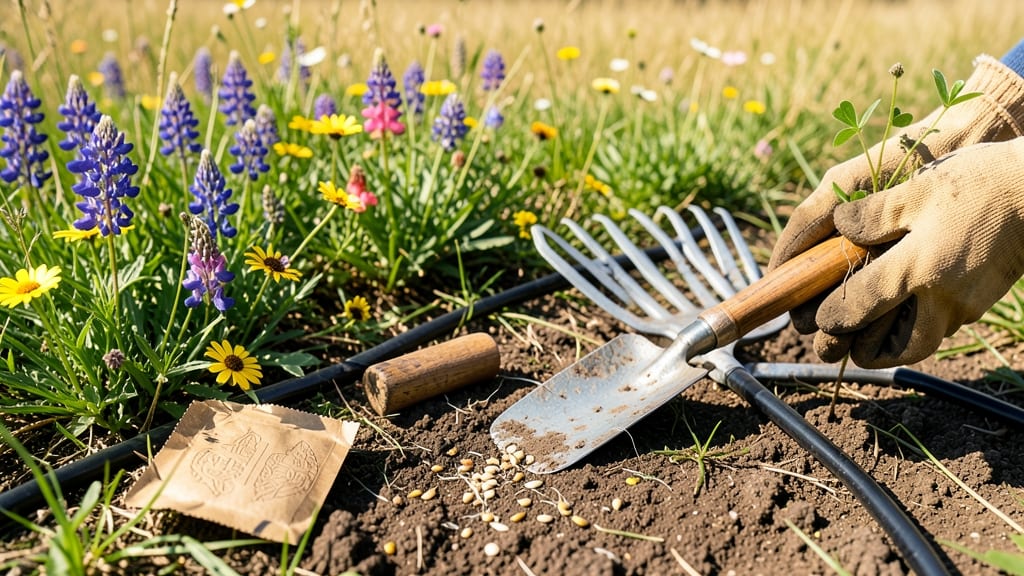
Planting wildflowers in Texas at the right time means year-round color—from bluebonnets in spring to golden black-eyed Susans in fall—without wasting seeds on heat or drought.
But here’s the catch: Texas isn’t one climate. A North Texas fall planting window (September–November) becomes a spring gamble in South Texas, where frost never arrives. Miss the mark, and you’ll end up with sparse blooms or seeds that sprout too late for summer’s brutal heat.
This guide breaks down the best months by region—from the Hill Country’s cool-season timing to the Gulf Coast’s extended spring window—plus soil prep tricks to give your wildflowers the fighting chance they need.
You’ll learn how to align planting with Texas’s wild swings in weather, which native mixes thrive where you live, and how to stretch blooms from March to November with just a few adjustments.
Texas wildflower planting calendar by region: exact months for best blooms
Texas wildflowers thrive when planted at the right time, but the perfect window shifts dramatically from North Texas to the Gulf Coast. Cool-season varieties like bluebonnets need early fall planting, while warm-season black-eyed Susans prefer spring.
Even within regions, microclimates—like the Hill Country's rocky soils or East Texas's humidity—can alter your ideal timing by weeks.
I’ve broken down the best months for each Texas region, accounting for frost dates, rainfall patterns, and native species. Whether you’re in West Texas’s arid plains or East Texas’s lush forests, these guidelines ensure vibrant blooms year-round.
Pro tip: Fall planting (September–November) is my go-to for cool-season wildflowers, while spring planting (February–April) works best for warm-season varieties.
🌱
| Region | Best Planting Months | Cool-Season Varieties | Warm-Season Varieties | Key Notes |
|---|---|---|---|---|
| North Texas (e.g., Dallas, Fort Worth) | September–October (fall) or February–March (spring) | Bluebonnets, winecups | Black-eyed Susans, blanket flowers | First frost: December 15; avoid planting after November 1. |
| Central Texas (e.g., Austin, San Antonio, Hill Country) | October–November (fall) or March (spring) | Mexican poppies, coreopsis | Lantana, salvia | Rocky soils need light raking before seeding. |
| East Texas (e.g., Houston, Tyler, Longview) | September–October (fall) or February (spring) | Violet wild indigo, partridge pea | Firewheel, coneflower | Humidity increases fungal risk; space seeds wider. |
| West Texas (e.g., El Paso, Lubbock, Midland) | September–October (fall) or March–April (spring) | Prickly poppy, desert marigold | Blue daisy, evening primrose | Drought-tolerant; water deeply but infrequently. |
| Gulf Coast (e.g., Corpus Christi, Brownsville) | September–October (fall) or January–February (spring) | Mexican feather grass, salvia | Plume poppy, four o’clocks | Salty soils? Try salt-tolerant varieties like seaside daisy. |
In North Texas, where winters can dip below freezing, I recommend planting cool-season wildflowers like bluebonnets in September–October to establish roots before frost. Warm-season varieties, such as black-eyed Susans, thrive when sown in February–March, avoiding the hottest summer months.
The Hill Country’s rocky terrain demands extra prep—rake lightly to expose soil and mix in compost for better seed-to-soil contact.
Central Texas gardeners have a slight edge with its milder winters. Here, October–November is ideal for fall planting, while March kicks off spring blooms. My top pick for this region? Mexican poppies, which bloom prolifically with minimal care.
For West Texas, where water is scarce, focus on drought-resistant species like prickly poppy and plant in September–October to capitalize on fall rains.
East Texas’s humid climate means fungal diseases are a risk, so I space seeds 12–18 inches apart and avoid overhead watering. September–October is prime for cool-season blooms, while February launches warm-season varieties.
The Gulf Coast, with its longer growing season, allows for January–February spring planting—perfect for seaside daisies that tolerate salty soils.
Regardless of region, I always test soil moisture before planting. If the ground feels dry 2 inches deep, water lightly to help seeds germinate. For large-scale plantings, use a seed spreader to ensure even coverage, and mulch lightly to retain moisture.
Remember: native wildflowers are the easiest to grow—they’re already adapted to Texas’s extremes!
Pro tip: Mark your calendar for the first frost date in your area (check the National Weather Service for local averages). Planting 6–8 weeks before ensures your wildflowers establish roots before winter sets in.
And if you miss the fall window? Spring planting is your next best bet—just be ready to water regularly until rains return.
🌼
How to adjust planting times for Texas microclimates and soil types
Texas's diverse landscapes—from the urban heat islands of Dallas to the rocky terrain of the Hill Country—create unique growing conditions for wildflowers. Your local microclimate can shift ideal planting times by 4-6 weeks, so understanding these factors is key to vibrant blooms.
For example, sandy soils in West Texas dry out faster than clay-heavy East Texas soil, requiring earlier fall planting.
Start by checking your last frost date, which varies wildly: December 15 in North Texas but February 1 in South Texas. This alone can determine whether you plant warm-season or cool-season varieties.
Pair this with your rainfall patterns—drought-prone areas like El Paso need seeds sown in September for spring rains to germinate them, while Houston's humidity allows later October plantings.
- 1. Urban Heat Islands: Plant bluebonnets and Indian paintbrush in late September (2 weeks earlier than rural areas) to avoid summer heat stress. Use mulch to retain moisture.
- 2. Rocky Terrain: Loosen soil with compost before planting wild bergamot in October. Rocky areas dry faster—water deeply once weekly after germination.
- 3. Sandy Soils: Plant coreopsis in August (not fall) to capitalize on summer rains. Mix 1 inch of compost into topsoil to improve water retention.
- 4. Drought-Prone Zones: Choose native grasses like switchgrass and sow in September. Group plants in 5-foot clusters to reduce water loss.
- 5. Companion Planting: Pair black-eyed Susans with salvia in spring (March) to extend blooms. Salvia’s deep roots attract pollinators, boosting Susans’ productivity.
Don’t overlook native companion plants—they’re nature’s way of extending bloom seasons. For instance, planting wild indigo alongside Mexican hat in spring creates a 3-month succession of color. The indigo’s early spring blooms give way to the hat’s summer display, ensuring your garden stays lively year-round.
For drought-prone areas, focus on deep watering (1-2 inches weekly) rather than frequent shallow watering. This encourages roots to grow deeper, making wildflowers like goldenrod resilient. Pair this with drip irrigation to minimize evaporation, especially in sandy soils where moisture disappears quickly.
Finally, use rainfall patterns as your guide: aim to plant when 1-2 inches of rain are forecast within 2 weeks of sowing. In West Texas, this might mean September plantings, while East Texas can wait until October.
Adjust your seed depth too—1/4 inch for fine seeds like bluebonnets, 1/2 inch for larger seeds like coreopsis.
With these adjustments, your Texas wildflowers will thrive despite the state’s extreme climate variations. Start small—test a 10x10-foot plot with your local microclimate in mind—and watch your garden become a pollinator paradise year after year. 🌼