
Flowers
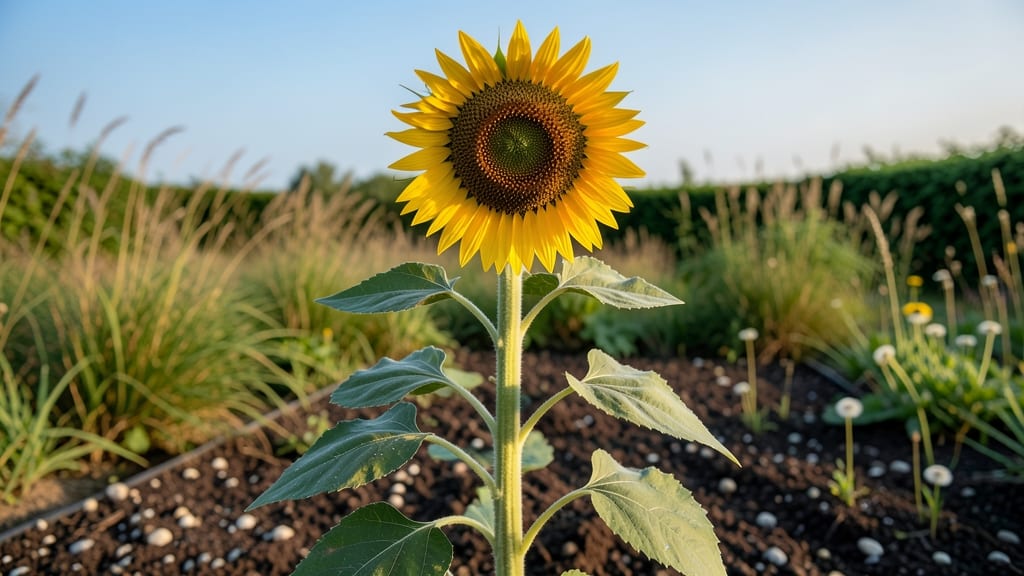
Sunflowers grow from seed to full bloom in 45 to 120 days, depending on the variety and care you provide—so if you’ve ever planted one expecting instant results, you’ll want to adjust your expectations (and your garden layout).
That three-month window can feel like an eternity when you’re waiting for those cheerful 🌻 faces to pop up, but the truth is, some dwarf varieties bloom in as little as 6 weeks, while giant sunflowers take nearly four months to reach their towering heights.
Knowing the exact timeline helps you plan everything from spacing to harvest—no more crowded plots or missed opportunities.
In this guide, I’ll break down the growth stages by variety—from Teddy Bear dwarfs to Mammoth Russian giants—so you can track progress month by month.
You’ll also learn how sunlight, soil, and even your planting date can speed up or slow down growth, plus the one trick that cuts 10 days off your wait time.
Ready to turn your garden into a sunflower showstopper? Let’s dive into the numbers, tips, and timelines that’ll have you harvesting seeds or cutting flowers like a seasoned pro.

Sunflower growth timeline by variety: from seed to full bloom
Sunflowers are one of the fastest-growing plants in the garden, but their growth timeline varies dramatically between dwarf varieties and giant cultivars. A 'Teddy Bear' sunflower might reach maturity in just 60 days, while a 'Mammoth Russian' can take up to 120 days or more.
Understanding these differences helps you plan your garden layout, watering schedule, and harvest timing with precision. For example, planting dwarf varieties in succession every 2 weeks can stretch your cut-flower season for months.
The growth process follows four key phases: germination, stem elongation, bud formation, and full bloom. Each phase has distinct height milestones and care requirements.
Germination typically occurs within 7–14 days after planting, but stem elongation—where the real height gains happen—can vary from 2–4 inches per week in fast growers to just 1–2 inches per week in giants. Knowing these rates helps you adjust spacing and support structures early.
Here’s a quick comparison of growth speeds: 'Autumn Beauty' (mid-size) grows 3–6 feet tall in 70–80 days, while 'Russian Giant' varieties can exceed 12 feet in 100–120 days.
Even within the same variety, factors like soil temperature, sunlight exposure, and water consistency can shift your timeline by 10–20 days. For instance, planting in 60°F+ soil speeds up germination by 3–5 days compared to cooler conditions.
| Variety | Height at Maturity | Days to Sprout | Days to Bloom | Growth Rate (in/week) | Key Milestones |
|---|---|---|---|---|---|
| Teddy Bear | 1–3 ft | 7–10 days | 50–60 days | 2–4 in | Fastest bloomer; ideal for containers |
| Autumn Beauty | 3–6 ft | 7–12 days | 70–80 days | 3–5 in | Mid-size; great for cut flowers |
| Mammoth Russian | 10–14 ft | 10–14 days | 100–120 days | 1–2 in | Slowest grower; needs staking |
| ProCut | 5–7 ft | 8–12 days | 65–75 days | 3–4 in | Long vase life; disease-resistant |
Growth rates based on ideal conditions: 6+ hours of sun, 60°F+ soil, consistent moisture
Let’s break down the month-by-month growth for a 'Mammoth Russian' sunflower, the slowest but most dramatic grower. In Month 1 (days 1–30), you’ll see sprout emergence within 10–14 days, followed by a 1–2 inch stem by day 21.
By Month 2 (days 31–60), the stem will surge to 3–5 feet tall, and you’ll notice bud formation at the top. This is when staking becomes critical—giant varieties can bend or snap under their own weight.
By Month 3 (days 61–90), your 'Mammoth Russian' will hit its growth spurt, adding 4–6 feet in height. The flower bud will swell visibly, and the stem will harden as it prepares to support the heavy bloom.
This phase is also when nutrient demand peaks, so side-dress with a balanced fertilizer (10-10-10) if you notice yellowing leaves. In Month 4 (days 91–120), you’ll finally see
Factors that speed up or slow down sunflower growth (and how to optimize them)
Sunflowers are fast growers, but their speed depends heavily on four key factors: sunlight exposure, soil temperature, watering consistency, and fertilization.
While some varieties like 'Teddy Bear' can reach 3 feet in just 60 days, others like 'Mammoth Russian' may take 120 days or more under suboptimal conditions. Let's break down how each factor impacts growth—and how to optimize them for the fastest, healthiest plants.
Sunlight is the most critical factor. Sunflowers need 8+ hours of direct sun daily to thrive. In partial shade (4–6 hours of sun), growth slows dramatically, leading to 20–30% slower maturation and weaker stems.
Even morning sun only can stunt growth compared to full-day exposure. If your garden has limited sunlight, consider reflective surfaces like white walls or mirrors to maximize light absorption.
Soil temperature also plays a huge role. Seeds won’t sprout until soil reaches 55°F (13°C), but ideal germination occurs at 70–85°F (21–29°C). Cold soil delays sprouting by 1–2 weeks, while warm soil can speed it up.
Use black plastic mulch in cooler climates to warm the soil faster, or wait until late spring in cold regions to avoid slow starts.
⚖️ Ideal vs. Suboptimal Growing Conditions
- Sunlight: 8+ hours/day
- Soil Temp: 70–85°F (21–29°C)
- Water: Deep soak 2x/week
- Fertilizer: Balanced 10-10-10
- Growth Time: 45–60 days
- Sunlight: 4–6 hours/day
- Soil Temp: Below 55°F (13°C)
- Water: Inconsistent/overwatered
- Fertilizer: None or excess nitrogen
- Growth Time: 90–120+ days
*Example: 'Teddy Bear' sunflowers grow 3x faster in ideal conditions vs. partial shade.
Watering consistency is often overlooked but critical. Sunflowers need 1–1.5 inches of water weekly, but overwatering or drought stress both slow growth. Overwatering causes root rot, while drought stress leads to stunted stems and smaller blooms.
Water deeply in the morning to reduce evaporation and fungal risks. If your soil drains poorly, amend it with compost or sand to improve aeration.
Fertilization can accelerate growth by 10–20% when done correctly. Use a balanced 10-10-10 fertilizer at planting and again when stems reach 12 inches tall. Avoid high-nitrogen fertilizers, which promote leafy growth over flowers.
Instead, focus on phosphorus and potassium to boost blooming and seed production. For faster results, add compost or bone meal to the soil before planting.
For the fastest growth, try pre-sprouting seeds indoors 7–10 days before transplanting. This gives them a 2–3 week head start compared to direct sowing. Use grow lights if natural light is limited, and transplant seedlings when they’re 3–4 inches tall and soil is warm.
This method is especially useful in short growing seasons or cooler climates.
By optimizing these four factors, you can cut sunflower growth time by 30–50% and enjoy towering blooms in record time. Start with full sun exposure, warm soil, consistent watering, and balanced fertilization, and watch your sunflowers reach their full potential faster than ever!