Container Gardens
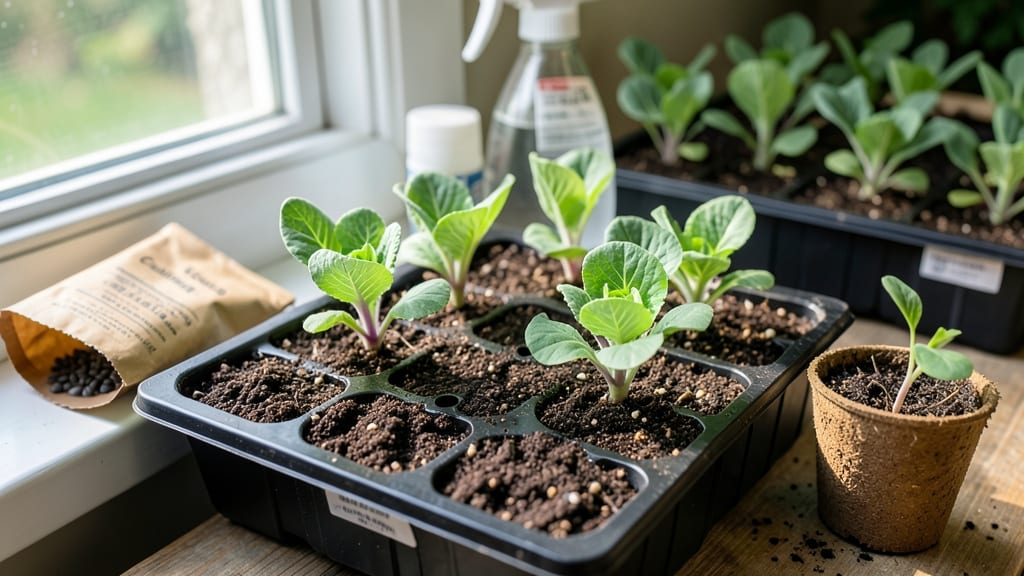
To start cauliflower seeds indoors, aim for 6–8 weeks before your last frost date—this timing ensures sturdy seedlings ready for transplant when soil warms up.
Picture this: your 🌱 cauliflower seedlings stretching toward a weak light source, their stems thin and leggy. That’s what happens when you start too early, and it’s just as bad if you wait too long.
The difference between a thriving crop and a failed harvest often comes down to those weeks on the calendar.
Climate plays a huge role—northern gardeners need to begin earlier than southern growers, and heat-sensitive varieties demand even tighter windows. But don’t stress: with the right zone-specific math, you’ll know exactly when to crack those seed packets for strong, healthy starts that translate to a summer harvest.
Below, I’ll walk you through the exact weeks before last frost for your USDA zone, plus how to adjust for slow growers or short seasons. You’ll also learn how to avoid the three biggest timing mistakes that turn seedlings into flops.
Zone-specific weeks before last frost for cauliflower seed starting
Getting your cauliflower seeds started indoors at the right time ensures healthy seedlings ready for transplant just as your garden warms up. The general rule is to plant 8-10 weeks before your last spring frost date, but this varies dramatically across USDA zones.
In Zone 3 with its short growing season, you’ll need to start earlier than in Zone 10, where mild winters allow for extended planting windows.
Your last frost date is the critical benchmark—cauliflower needs 75-90 days to mature, so timing is everything. For example, if your frost date is May 15, count backward 8-10 weeks to determine your ideal indoor start date.
I’ve included a quick-reference table below to help you calculate your zone-specific window without the guesswork.