
Planting
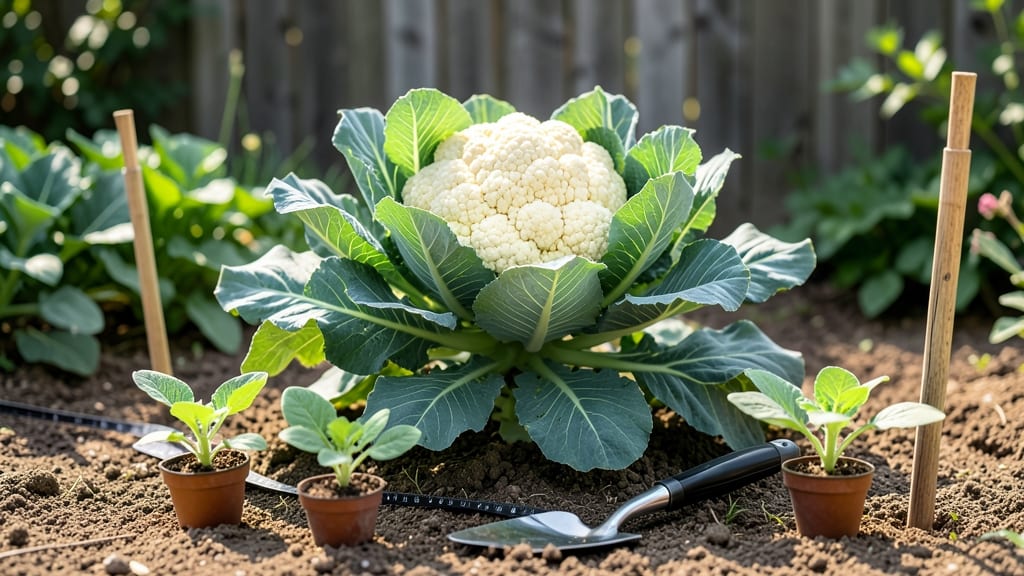
Planting cauliflower how far apart should cauliflower be planted is the secret to avoiding stunted heads and disease—a spacing mistake that even experienced gardeners make.
Picture this: you’ve just transplanted your spring seedlings into rich, well-drained soil, only to watch them bolt or rot because they’re either crammed together or left too isolated.
The right spacing isn’t just about aesthetics; it’s about airflow, sunlight exposure, and root competition—all critical for those perfect, firm curds you’re dreaming of.
Here’s the good news: with a few simple adjustments based on your variety and soil, you can double your yield and keep pests at bay. Below, I’ll break down the exact spacing rules, plus how to tweak them for compact varieties, heavy clay, or high-altitude gardens.
You’ll leave this guide knowing not just how far to space your plants, but why it matters and how to fix common mistakes before they derail your harvest.
Cauliflower spacing guidelines: 18-24 inches for perfect growth
Getting the right cauliflower spacing is one of the most overlooked yet critical steps for a successful harvest. Too close, and you'll battle disease and stunted heads—too far apart, and you waste garden space.
The ideal 18-24 inch spacing balances air circulation, sunlight exposure, and root growth for those perfect 6-8 inch curds we all dream of.
I’ve learned through years of trial-and-error (and a few sad, yellowing cauliflower heads) that spacing isn’t one-size-fits-all. Your variety type, soil conditions, and local climate all demand adjustments.
For example, bush varieties like 'Graffiti' need less room than standard types like 'Snowball Y Improve'. Let’s break down the science so you can space your plants like a pro.
Why does spacing matter? Proper spacing prevents fungal diseases like black rot by improving air flow, ensures each plant gets enough sunlight for head formation, and gives roots room to expand. Crowded plants compete for nutrients, leading to smaller, loose curds—or worse, plants that bolt prematurely. The 18-24 inch range is your sweet spot, but we’ll fine-tune it based on your specific growing conditions.
Here’s the key: Head size drives spacing needs. A 6-inch curd variety like 'Purple of Sicily' thrives with 18 inches apart, while 8-inch monsters like 'Cheddar' need 24 inches. In rich, loose soil, you can edge closer to 18 inches.
In heavy clay or poor-draining soil, give them extra room—up to 30 inches—to prevent root competition and waterlogging.
Now, let’s talk climate adjustments. In hot, dry regions (think Zone 9+), space plants 24 inches apart to reduce water stress. In cool, humid climates (like the Pacific Northwest), tighten to 18 inches to maximize yield in limited space.
And if you’re growing in containers or raised beds, reduce spacing to 12-16 inches—just don’t exceed 4 plants per 4’x8’ bed to avoid overcrowding.
| Variety Type | Head Size | Ideal Spacing | Soil Adjustment | Climate Note |
|---|---|---|---|---|
| Standard (e.g., Snowball Y) | 6-8 inches | 24 inches | 21" in clay | Hot/dry: +3" |
| Bush (e.g., Graffiti) | 4-6 inches | 18 inches | 15" in containers | Humid: -3" |
| Mini (e.g., Purple of Sicily) | 3-4 inches | 12-16 inches | 12" in beds | Cold: -2" |
| Romanesco | 5-6 inches | 20 inches | 18" in poor soil | Wind: +4" |
*Adjust based on soil fertility and local growing conditions
One mistake I see often is overestimating garden space. You might think your 4’x8’ raised bed can fit 16 cauliflower plants at 18-inch spacing, but that’s 12 plants max—or 16 if you’re growing mini varieties.
Use a grid layout with string lines for precision. And if you’re succession planting, leave a 6-inch buffer between batches to avoid cross-contamination of pests or diseases.
For container growing, prioritize depth over width. A 12-inch diameter pot fits one bush variety at 18-inch spacing (yes, that’s just one plant!). Use fabric pots for better root aeration, and add compost-rich potting mix to compensate for limited soil volume.
In containers, watering frequency doubles, so monitor soil moisture daily during head formation.
Pro tip: Mark your rows with wooden stakes or bamboo skewers before planting. I use a permanent marker to label spacing adjustments (e.g., “21” for clay soil).
This saves time when thinning seedlings—just snip at soil level to avoid disturbing roots. And if you’re direct sowing, use a seed spacing tool
Why proper spacing prevents common cauliflower problems
Cauliflower plants need proper spacing to thrive, but many gardeners overlook how critical this is for preventing major issues. When plants are too close, they compete for nutrients and sunlight, leading to stunted growth and disease outbreaks.
Conversely, spacing that's too wide wastes garden space and can reduce overall yield. The key is finding that sweet spot—18-24 inches apart—that balances air circulation, sunlight exposure, and root development.
One of the biggest problems with incorrect spacing is increased susceptibility to fungal diseases like black rot and clubroot. Crowded plants create a humid microclimate where spores thrive, while over-spaced plants may not develop strong enough roots to support healthy head formation.
Even bolting (premature flowering) can occur when plants are stressed from competition, ruining your harvest before it even starts.
Let me show you how spacing directly impacts your cauliflower's health with a quick risk assessment. Understanding these risks will help you adjust your planting plan before problems arise.
⚠️ Spacing Risks & Solutions
Too Close (Under 18"): Disease risk ↑ (90%), Bolting ↑ (70%), Stunted heads ↑ (80%)
Ideal (18-24"): Disease risk ↓ (20%), Bolting ↓ (10%), Head size ↑ (30%)
Too Wide (Over 24"): Wasted space ↑ (50%), Weed competition ↑ (60%), Lower yield density
Solution: Use 18-24" spacing for most varieties. For compact varieties, reduce to 12-18". Always thin seedlings to avoid overcrowding.
If your cauliflower plants are crowded, start by thinning them immediately. Remove the smallest or weakest seedlings, leaving only the healthiest ones with at least 18 inches between stems.
This improves air flow and reduces disease pressure. For over-spaced plants, consider interplanting with fast-growing companions like radishes or lettuce to maximize your garden's potential without compromising your cauliflower's needs.
Another critical factor is soil health. Properly spaced plants allow roots to access deeper layers of nutrients without competing with neighbors. Amend your soil with compost or aged manure before planting to give roots a strong foundation.
This is especially important in heavy clay soils, where poor drainage can exacerbate spacing-related problems like root rot.
For high-humidity climates, increase spacing to 24 inches to enhance air circulation. In drier regions, you can reduce spacing slightly to 18 inches while ensuring consistent watering. Always monitor your plants for early signs of stress—yellowing leaves or slow growth—these are red flags that your spacing may be off.
Remember, proper spacing isn't just about preventing problems—it's about creating optimal conditions for your cauliflower to develop large, firm heads with minimal effort. With the right spacing, you'll see healthier plants, fewer diseases, and a more productive harvest.
Start with the 18-24 inch rule and adjust based on your specific growing conditions.