Plants
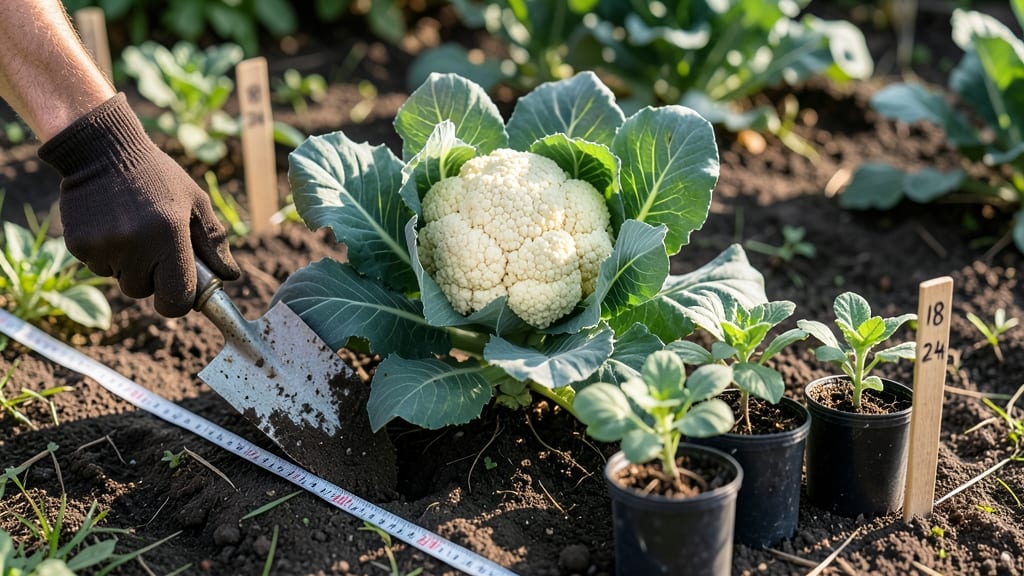
Spacing cauliflower plants properly is the secret weapon for bigger heads and fewer headaches in your garden.
Struggling with stunted 🥬 growth? The culprit might be right under your nose—or rather, between your plants. Too close, and you’re fighting for every inch of nutrients and sunlight, leaving your plants weak and your harvests disappointing.
But get it right, and you’ll see firmer heads, fewer pests, and a garden that thrives.
Most gardeners focus on planting time or soil prep, but spacing is where the magic happens. Whether you’re working in raised beds, containers, or traditional rows, the right distance keeps air circulating, prevents disease, and gives those plants room to grow into the plump, perfect heads you’re dreaming of.
Here’s how to measure it right—plus what to do if you’ve already planted too close and your cauliflower is fighting for survival.
Optimal cauliflower plant spacing: science-backed guidelines for maximum yield
Cauliflower thrives when given the right amount of space to develop large, tight heads. Too close, and your plants will compete for nutrients, sun, and water—leading to small, misshapen heads and increased disease risk.
The key is balancing root expansion with air circulation, especially in humid climates where fungal diseases like clubroot lurk.
Spacing requirements vary by cauliflower variety, but most gardeners follow a simple rule: 18–24 inches apart for standard varieties and 12–18 inches for dwarf or mini types.
Soil type also plays a role—loamy, well-draining soil allows roots to spread more freely, while heavy clay can restrict growth, requiring slightly more space.
Here’s the science behind it: Cauliflower plants need room to develop strong root systems and compact heads. Crowding forces plants to grow tall and leggy rather than sturdy, and it traps moisture, creating ideal conditions for rot and mildew.
Even in raised beds or containers, spacing matters—just because you’re working with limited space doesn’t mean you can skimp on it.
Let’s break down the expert-recommended spacing for different growing methods, starting with the most common: in-ground planting. For standard varieties like ‘Snowball Y Improved’ or ‘Purple of Sicily’, aim for 24 inches between plants in rows spaced 30–36 inches apart.
This gives roots enough room to expand while still allowing for easy harvesting.
| Variety Type | In-Ground Spacing (inches) | Raised Bed Spacing (inches) | Container Spacing (per pot) | Notes |
|---|---|---|---|---|
| Standard (e.g., 'Snowball Y') | 24" | 18-24" | 1 plant per 12" pot | Large heads; needs full sun |
| Semi-Dwarf (e.g., 'Cheddar') | 18-20" | 14-18" | 1 plant per 10" pot | Medium heads; good for small gardens |
| Dwarf (e.g., 'Purple of Sicily') | 12-16" | 10-12" | 1 plant per 8" pot | Small heads; ideal for containers |
| Romanesco (e.g., 'Green Bunching') | 18" | 14-16" | 2 plants per 12" pot | Continuous harvest; compact growth |
If you’re growing cauliflower in raised beds, you can space plants slightly closer—18–24 inches apart—because the soil is often looser and more fertile.
The key is to avoid planting too many rows side by side; leave at least 18 inches between rows to ensure airflow and easy access for harvesting. For container gardening, opt for dwarf varieties and use one plant per 10–12-inch pot to prevent root binding.
Crowding doesn’t just affect head size—it also increases disease risk. When plants are too close, humidity lingers between leaves, creating perfect conditions for downy mildew and clubroot. I’ve seen entire cauliflower patches fail because gardeners ignored spacing, assuming more plants would mean more yield.
The opposite is true: overcrowded plants produce fewer, smaller heads and are more susceptible to pests like cabbage moths.
Proper spacing also ensures even sunlight exposure, which is critical for head formation. Cauliflower heads need 6+ hours of direct sun daily to develop properly. If plants are too close, the inner leaves can shade the heads, leading to loose, yellowing curds.
To maximize sun exposure, plant in north-south rows and avoid tall plants nearby that could cast shade.
For succession planting, space your first batch according to the guidelines above, then sow a second batch 4–6 weeks later in the same spot. Just be sure to thin seedlings early—don’t wait until they’re crowded.
Use sharp scissors to snip unwanted seedlings at soil level to avoid disturbing the roots of nearby plants.
One final tip: If you’re short on space, consider interplanting with shallow-rooted companions like lettuce or radishes. These plants won’t compete for nutrients but will help maximize your garden’s productivity. Just avoid planting anything too tall or leafy, like kale, which can shade out your cauliflower.
🌱
5 Common crowding mistakes that ruin cauliflower harvests (and how to fix them)
Even with perfect soil and sunlight, cauliflower plants can still fail if they’re too close together. Crowding steals nutrients, air circulation, and sunlight—leading to stunted heads or bitter flavors. I’ve seen gardeners waste months of effort because they ignored these subtle warning signs until it was too late.
Yellowing leaves, small cauliflower heads, and plants leaning toward sunlight are all red flags. The good news? Most crowding issues are reversible with the right approach. Let’s diagnose the problem and fix it before your harvest suffers.
🌱 Cauliflower Crowding Checklist: Fix These 5 Mistakes Now
- 1. Planting too close at transplant: Seedlings spaced 12-18 inches apart (standard for small varieties) but left too tight after thinning.
- 2. Ignoring variety head size: Giant Romanesco varieties (24-inch spacing) planted like dwarf varieties (18-inch spacing).
- 3. Skipping mid-season thinning: Letting plants grow root-bound in containers or raised beds without adjusting spacing.
- 4. Overlooking leaf canopy competition: Outer leaves shading cauliflower heads due to overcrowded rows (30+ inches apart in traditional beds).
- 5. Delaying harvest to "fix" crowding: Waiting until heads are yellow or loose instead of thinning earlier to improve air flow.
💡 Pro Tip: Measure your plants at 4-6 weeks—if they’re touching, it’s time to thin!
Let’s tackle the first mistake: planting too close. If your seedlings are 12 inches apart but now look cramped, don’t panic. Gently grasp the outer leaves of the weakest plant (not the stem!) and twist it free. This minimizes root damage and gives remaining plants room to breathe.
For variety-specific spacing, dwarf varieties like ‘Snowball Y’ need 18 inches, while large varieties like ‘Romanesco’ require 24-30 inches. Check your seed packet—these numbers aren’t suggestions, they’re survival guides for your plants.
If you’re growing in containers or raised beds, overcrowding is even riskier. Roots compete for water and nutrients, leading to blossom-end rot or hollow stems. Thin to one plant per 12-18 inches of container width—no exceptions.
Finally, remember: prevention is easier than fixing. Space your cauliflower correctly from day one, and you’ll avoid the heartbreak of tiny, bitter heads. Your future self (and your dinner plate) will thank you.