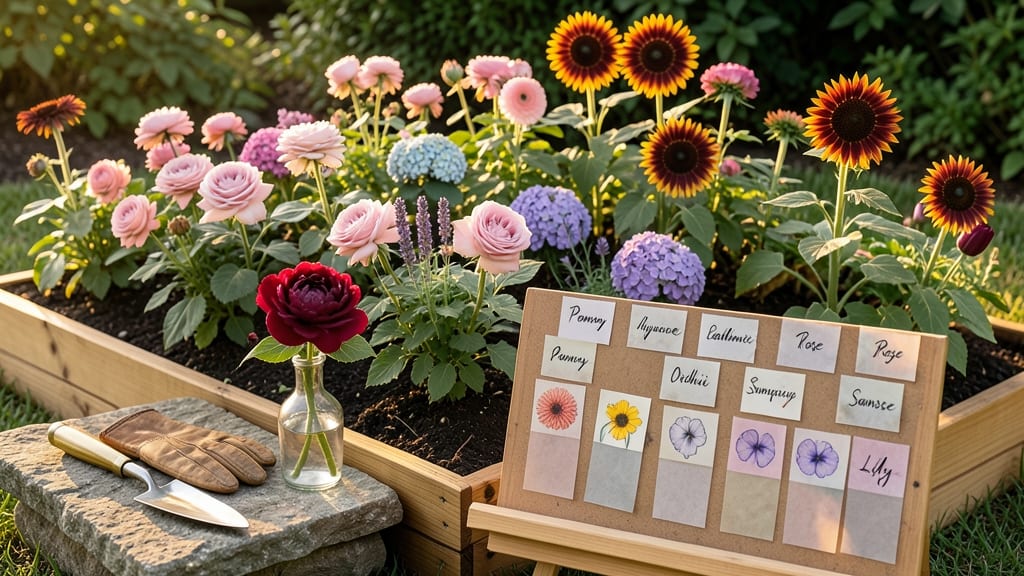
The different types of flowers you choose can turn a simple garden into a vibrant, ever-changing masterpiece 🌸 — but knowing which ones thrive together makes all the difference.
Imagine stepping into your backyard and being greeted by a cascade of colors that shift with the seasons: bold sunflowers in summer, delicate pansies in spring, and fiery mums in fall.
The right mix doesn’t just look stunning—it also attracts pollinators, fills gaps in bloom times, and keeps your space lively year-round.
From towering perennials that return every year to cheerful annuals that burst with seasonal flair, each flower plays a unique role in your design.
Whether you’re working with a sunny border, a shady corner, or a mix of both, the key is pairing flowers that complement each other in height, color, and bloom duration.
In this guide, I’ll walk you through the most popular flower types, their ideal growing conditions, and how to combine them for a garden that’s as easy to maintain as it is beautiful. Ready to create a space that feels like a painting in full bloom?
15 Popular flower types categorized by growth habits and seasonal blooms
Planning a vibrant garden starts with understanding the key differences between flower types. Each category—annuals, perennials, bulbs, and shrubs—offers unique bloom durations, colors, and care requirements.
I’ve curated 15 standout varieties that transform spaces year-round, from spring bulbs to winter-hardy shrubs, ensuring your garden stays dynamic and visually stunning.
Annuals like marigolds and petunias deliver bold colors but die after one season, while perennials such as coneflowers and black-eyed Susans return yearly with minimal effort. Bulbs like tulips and daffodils store energy underground, blooming spectacularly in spring before fading.
Shrubs like hydrangeas and roses provide structure and long-lasting blooms, perfect for borders or focal points.
| Flower Type |
Growth Habit |
Peak Bloom Season |
Color Palette |
Sun Needs |
Height Range |
| Marigold |
Annual |
Summer-Fall |
Yellow, Orange |
Full Sun |
1-2 ft |
| Petunia |
Annual |
Summer-Fall |
Pink, Purple, White |
Full Sun-Partial Shade |
6 in-2 ft |
| Coneflower |
Perennial |
Summer-Fall |
Pink, Purple, Yellow |
Full Sun |
2-3 ft |
| Tulip |
Bulb |
Spring |
Red, Pink, Yellow, White |
Full Sun-Partial Shade |
1-2 ft |
| Daffodil |
Bulb |
Early Spring |
Yellow, White, Orange |
Full Sun |
1-1.5 ft |
| Hydrangea |
Shrub |
Summer-Fall |
Pink, Blue, Purple |
Partial Shade |
3-6 ft |
| Black-Eyed Susan |
Perennial |
Summer-Fall |
Yellow, Gold |
Seasonal flower color palettes for year-round garden beauty
Creating a vibrant garden that thrives through every season is all about strategic flower color palettes that complement each other. By selecting seasonal blooms with overlapping bloom times, you can ensure your garden remains a visual feast from spring through winter.
The key lies in understanding how different flower types contribute to each season's palette.
For example, spring flowers like tulips and daffodils set the stage with bright yellows and whites, while summer annuals like zinnias and marigolds take over with bold reds and oranges. Fall perennials such as mums and asters add rich purples and golds, and winter interest plants like hellebores and pansies keep the show going with soft blues and whites.
🌸 Seasonal Flower Performance Ratings
9/10
Spring Blooms
Tulips, Daffodils, Hyacinths
8/10
Summer Annuals
Zinnias, Marigolds, Petunias
7/10
Fall Perennials
Mums, Asters, Sedum
6/10
Winter Interest
Hellebores, Pansies, Winter Jasmine
Rating: 10 = Year-round bloom potential | 1 = Seasonal only
To create seamless transitions between seasons, I recommend blending early bloomers with late-season varieties. For instance, pair spring bulbs like crocuses with late-summer perennials such as black-eyed Susans. This ensures your garden never looks bare, even during transitional months.
Low-maintenance options like native flowers and drought-tolerant perennials can simplify your garden while adding color. For example, coneflowers and black-eyed Susans thrive on minimal care and provide long-lasting blooms. These plants also attract pollinators, adding another layer of beauty to your garden.
When designing your color palette, consider the height and texture of each flower to create depth. Taller blooms like delphiniums can serve as backdrop plants, while shorter varieties such as alyssum add ground cover.
Mixing textures—like the feathery foliage of lamb's ear with the bold petals of roses—adds visual interest throughout the year.
Don’t forget to incorporate foliage plants like ornamental grasses or heuchera for year-round structure. These plants provide winter interest when many flowers are dormant. For example, Russian sage offers silvery foliage and lavender blooms that last well into fall, making it a versatile choice for any garden.
★★★★★4.7(12 reviews)
|