Plants
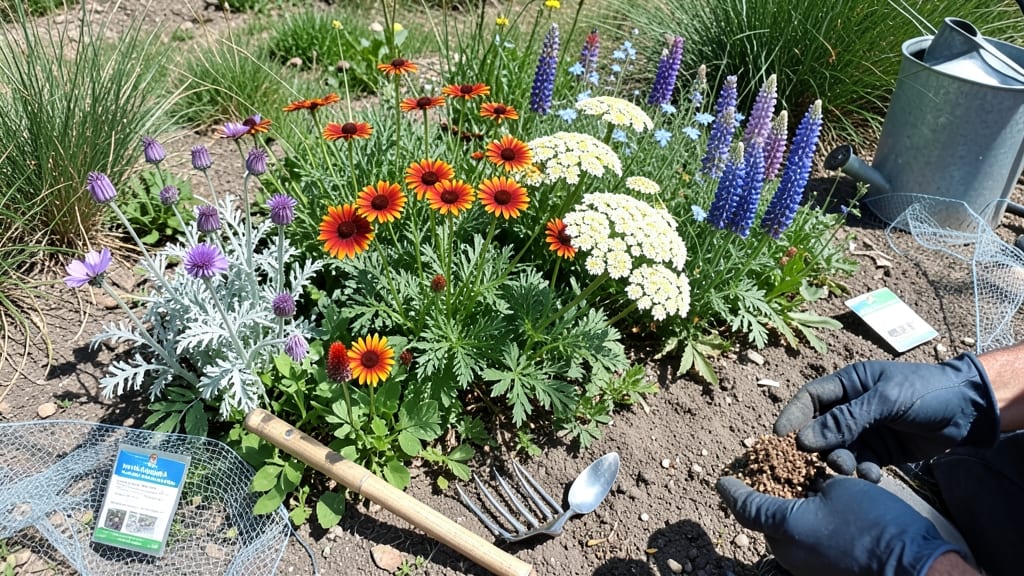
Planting wildflower seeds in Colorado at the right time ensures vibrant blooms and thrives in your meadow—miss the window, and you risk sparse or late flowers.
Colorado’s diverse USDA zones 4-7 and mountain weather make timing everything. A late frost can wipe out seedlings, while planting too early risks drought stress. The key? Align your schedule with local frost dates and soil conditions.
For most of the state, late winter to early spring (March-April) is ideal, but high-altitude areas like Aspen may need to wait until May. Fall planting in late summer (August-September) also works, giving seeds time to root before winter.
In this guide, I’ll break down the best planting windows by zone, soil prep tips, and how to protect your wildflowers from Colorado’s unpredictable weather. Let’s get those 🌼 seeds in the ground the right way!
Colorado’s wildflower planting windows by USDA zone (with frost date maps)
Colorado’s wildflower meadows thrive when planted at the right time, but the USDA zones 4-7 here have wildly different frost dates—Denver’s last frost might be April 15, while Aspen’s could linger until May 15. Elevation plays a huge role: every 1,000 feet up delays spring by about 3-5 days.
To avoid sparse blooms or seedlings lost to late frosts, I’ll break down the best planting windows for each zone and how to adjust for your specific microclimate.
Most Colorado gardeners focus on two planting windows: early spring (March-April) and late summer (August-September). Spring planting gives flowers a full season to establish roots before winter, while fall planting lets seeds germinate in cool soil and bloom early next year.
However, high-altitude areas (zones 6-7) often shift these windows by 2-4 weeks later. Always check your local last frost date—planting too early risks frost damage, while waiting too long may result in weak seedlings before winter.
Elevation matters more than latitude in Colorado. A garden in Fort Collins (USDA 5a, 5,000 ft) might align with Denver’s (5b, 5,280 ft) timing, but Telluride (USDA 6a, 8,500 ft) could be 3 weeks behind. Use these general rules: subtract 1 week per 1,000 ft elevation gain from your zone’s average frost dates. For precise timing, I recommend using the National Weather Service’s frost maps or local CoCoRaHS data for your county.
| USDA Zone | Avg. Last Frost | Spring Planting Window | Fall Planting Window | Key Wildflowers |
|---|---|---|---|---|
| 4 (e.g., Grand Junction) | March 15-April 1 | Mid-March to early April | Late August to mid-Sept | Blanket flower, yarrow, purple coneflower |
| 5 (e.g., Denver, Fort Collins) | April 1-15 | Late March to mid-April | Mid-August to early Sept | Bee balm, black-eyed Susan, penstemon |
| 6 (e.g., Colorado Springs, Aspen) | April 15-May 1 | Early April to late April | Late August to mid-Sept | Lupine, columbine, goldenrod |
| 7 (e.g., Durango, Pagosa Springs) | May 1-15 | Late April to early May | Mid-August to early Sept | Indian paintbrush, asters, mountain bluebell |
For spring planting, aim to sow seeds 4-6 weeks before your last frost date. This gives them time to germinate and develop a strong root system before summer heat arrives.
In zone 4 areas, I’ve had success starting seeds indoors in late February for an early March outdoor transplant. For fall planting, seed 6-8 weeks before your first frost—this ensures germination before winter dormancy sets in.
In high-altitude zones (6-7), consider using a lightweight row cover to protect young seedlings from late frosts.
Colorado’s alkaline soils and drought cycles mean preparation is key. Before planting, rake the soil to remove rocks and debris, then lightly scratch the surface to create a seed bed. For clay-heavy soils (common in eastern Colorado), mix in compost or sand to improve drainage.
Native wildflowers like yarrow and blanket flower thrive in these conditions, while delicate species like columbine need well-draining soil to prevent rot. Always water lightly after planting to settle seeds into the soil without washing them away.
Don’t overlook microclimates—a south-facing slope in zone 5 Denver might warm up enough for early planting, while a north-facing yard could be 2 weeks behind.
Test your soil’s moisture by pressing your finger 1 inch deep; if it’s dry, water gently. Overwatering seeds is a common mistake—most wildflowers prefer dry conditions after germination. Once established, many Colorado natives need little to no supplemental water, making them perfect for xeriscaping.
If you’re planting in <
Best wildflower seed types for Colorado’s climate and soil conditions
Colorado’s alkaline soils and dry climates demand wildflower varieties that thrive with minimal water and adaptable root systems. Native species like blanket flower and yarrow dominate because they’re drought-resistant and attract pollinators. These plants also handle Colorado’s high-altitude UV exposure better than non-native varieties.
For low-elevation areas (USDA Zones 5-6), focus on beebalm and black-eyed Susan, which tolerate hotter summers and rocky soils. In high-altitude regions (Zones 4-5), lupine and columbine excel—their deep roots access moisture in shallow, dry soil.
Both groups support Colorado’s pollinator ecosystems while requiring little maintenance.
🌱
Wildflower Seed Selection Guide
- Blanket Flower (Gaillardia)
- Black-Eyed Susan (Rudbeckia)
- Beebalm (Monarda)
✅ Thrives in hot, dry summers; drought-tolerant once established.
- Lupine (Lupinus)
- Columbine (Aquilegia)
- Yarrow (Achillea)
✅ Handles cold nights and shallow soils; pollinator magnet.
- Native species support local ecosystems
- Low water needs after establishment
- Year-round interest with seed heads
- Some seeds need scarification for germination
- Slow establishment in first year
- May self-seed aggressively in ideal conditions
When selecting seeds, prioritize native mixes over non-native varieties—they’ve evolved to handle Colorado’s alkaline pH (7.5-8.5) and drought cycles. For example, blanket flower thrives in sandy, well-draining soil common in Front Range areas, while lupine prefers clay-loam soils found at higher elevations.
To prepare your site, avoid tilling—Colorado’s soils are often rocky or compacted. Instead, lightly rake the area to create a fine seedbed and mix in compost to improve moisture retention.
Scatter seeds lightly (they’re often tiny) and press them into the soil with a board or your boot heel for seed-to-soil contact.
After planting, water deeply but infrequently to encourage deep root growth. Most Colorado wildflowers establish best with 1-2 inches of water per week during the first growing season. Once mature, they’ll survive on natural rainfall, making them perfect for xeriscaping projects.
🌿