
Planting
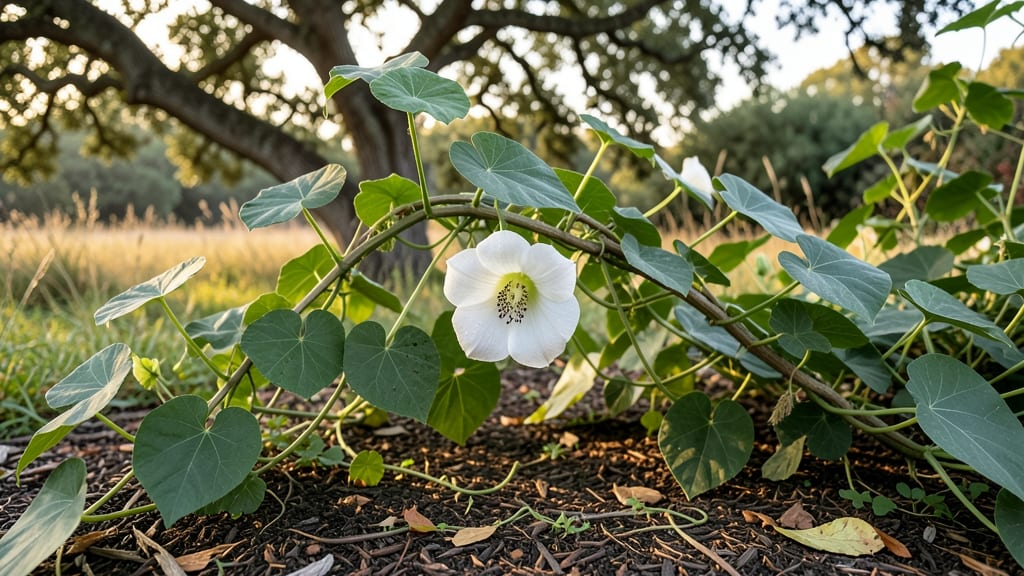
The moonflower plant looks like a magical night-blooming vine with giant white petals that open only after sunset, revealing a striking yellow center.
Imagine a plant that stays dormant all day, only revealing its breathtaking beauty under the moonlight—this is the moonflower (Ipomoea alba), a rare night-blooming vine with flowers the size of dinner plates. 🌙
Its heart-shaped leaves grow up to 6 inches long, climbing tall trellises or sprawling across fences, while its fragrant blooms release a sweet, intoxicating scent as dusk falls. Unlike daytime flowers, moonflowers close by morning, leaving behind a mystery for curious gardeners.
Below, I’ll break down how to spot its unique features—from its towering vines to its moonlit petals—and how to tell it apart from look-alikes like morning glories.
Distinctive physical features of moonflower plants you’ll recognize instantly
The moonflower (Ipomoea alba) is a night-blooming vine that transforms your garden into a moonlit spectacle. Its giant white flowers can reach 6-8 inches wide, resembling dinner plates, and they emit a sweet, intoxicating fragrance after sunset.
Unlike daytime bloomers, moonflowers stay closed during the day, only unfurling their petals under moonlight or artificial light.
One of the first things you’ll notice is the vine’s rapid growth. Moonflowers can climb 10-15 feet in a single season, using twining stems to latch onto trellises, fences, or nearby structures.
The vines are woody and sturdy, capable of supporting the weight of those massive blooms. This growth habit sets it apart from morning glories, which typically have thinner, less robust stems.
Now, let’s talk about the leaves—large, heart-shaped, and glossy green. They grow 3-6 inches long and are arranged alternately along the vine. Young leaves may appear slightly fuzzy, but they smooth out as the plant matures.
These leaves are a key identifier: morning glories often have smaller, more pointed leaves with a rougher texture.
The flower anatomy is another standout feature. Each bloom has 5-6 ruffled petals with a bright yellow center that contrasts beautifully against the white. The petals are silky smooth to the touch, almost like tissue paper.
Unlike four o’clock flowers, which have hourglass-shaped petals, moonflowers lack any dark markings or patterns.
Here’s a quick visual guide to help you spot a moonflower in your garden or at a nursery:
| Feature | Description | Key Difference |
|---|---|---|
| Flowers | 6-8" wide, white with yellow center, blooms only at night | Morning glories bloom in daylight and are smaller (3-4") |
| Leaves | Large, heart-shaped, glossy green, 3-6" long | Morning glory leaves are smaller and more pointed |
| Stems | Woody, twining, 10-15' long | Four o’clock flowers have thinner, less woody stems |
| Fragrance | Sweet, strong scent at night | Evening primrose has a mild, citrusy smell |
| Bloom Time | Dusk to dawn, closes by morning | Night-blooming jasmine stays open longer into daylight |
The root system of a moonflower is another fascinating feature. It develops a deep, fibrous network that helps anchor the vine and access moisture from deep in the soil.
This makes moonflowers drought-tolerant once established, though they prefer consistently moist soil during their growing season. Young plants, however, are more sensitive to dry conditions.
If you’re trying to distinguish moonflowers from their daytime doppelgängers, pay attention to the buds. Moonflower buds are green and fuzzy before opening, while morning glory buds are usually smoother and more rounded.
Additionally, moonflowers often produce seed pods that resemble tiny lanterns, adding another layer of visual interest long after the blooms have faded.
One of my favorite tricks for identifying moonflowers is to check the flowers in the morning. If you find a vine with wilted, closed blooms that smell faintly sweet, you’ve likely got a moonflower.
This nocturnal habit is a dead giveaway—most daytime flowers will still be open and vibrant after sunrise.
For gardeners in USDA zones 6-10, moonflowers thrive in warm climates and can even be grown as annuals in cooler regions. Their ability to climb and spread quickly makes them perfect for trellises, pergolas, or even as a living privacy screen.
Just be prepared for their aggressive growth—once established, they can take over a fence or arbor in no time!
🌙
How moonflower flowers compare to other night-blooming plants
Moonflowers (Ipomoea alba) aren’t alone in their nocturnal charm—night-blooming plants like night-blooming jasmine, evening primrose, and four o’clock flowers also steal the show after dark.
But what sets moonflowers apart? Let’s compare their unique traits, from petal markings to bloom duration, so you can pick the perfect nighttime star for your garden.
The moonflower’s giant white petals (up to 12 inches wide) and velvety texture make it stand out. Unlike other night bloomers, its yellow throat and sweet, tropical fragrance draw in moth pollinators with precision.
Meanwhile, night-blooming jasmine (Cestrum nocturnum) has smaller, tubular flowers in clusters, emitting a stronger, spicy scent that’s more noticeable to humans.
| Trait | Moonflower (Ipomoea alba) | Night-Blooming Jasmine (Cestrum nocturnum) | Evening Primrose (Oenothera biennis) | Four O’Clock (Mirabilis jalapa) |
|---|---|---|---|---|
| Flower Size | 10–12 inches wide | 1–2 inches long (clusters) | 2–3 inches wide | 2–3 inches wide |
| Petal Color | Pure white with yellow throat | White or pale green | Yellow (sometimes pink/white) | Pink, yellow, or white |
| Bloom Duration | 1 night (closes by dawn) | Multiple nights (weeks) | 1 night (opens/closes daily) | 1 night (closes by noon) |
| Fragrance | Sweet, tropical, moth-attracting | Strong, spicy, human-noticeable | Mild, citrusy | Light, slightly sweet |
| Growth Habit | Fast-climbing vine (10–15 ft) | Shrub (3–6 ft tall) | Biennial herb (2–3 ft tall) | Trailing or bushy (1–3 ft) |
| Pollinators | Moths (specialized nocturnal) | Moths + bats | Bees (diurnal) + moths | Beetles, moths, hummingbirds |
While evening primrose and four o’clock flowers bloom for one night, their smaller size (2–3 inches) and daily closing/opening cycle make them less dramatic. Four o’clocks also change color—often shifting from pink to white—but lack the moonflower’s show-stopping scale.
Meanwhile, evening primrose is a biennial, meaning it blooms only once before dying, unlike moonflowers, which rebloom annually if given support.
For gardeners who love drama, moonflowers win with their single-night spectacle and moth magnetism. But if you prefer longer-lasting blooms or human-friendly scents, night-blooming jasmine or four o’clocks might be better fits.
Each plant serves a unique nocturnal niche, so choose based on your garden’s aesthetic goals and pollinator priorities!
Pro tip: Train moonflowers on a trellis to maximize their vertical impact, while four o’clocks thrive in containers for easy relocation. Both strategies highlight their distinct nocturnal beauty without competing for space.
🌙