
Vegetables
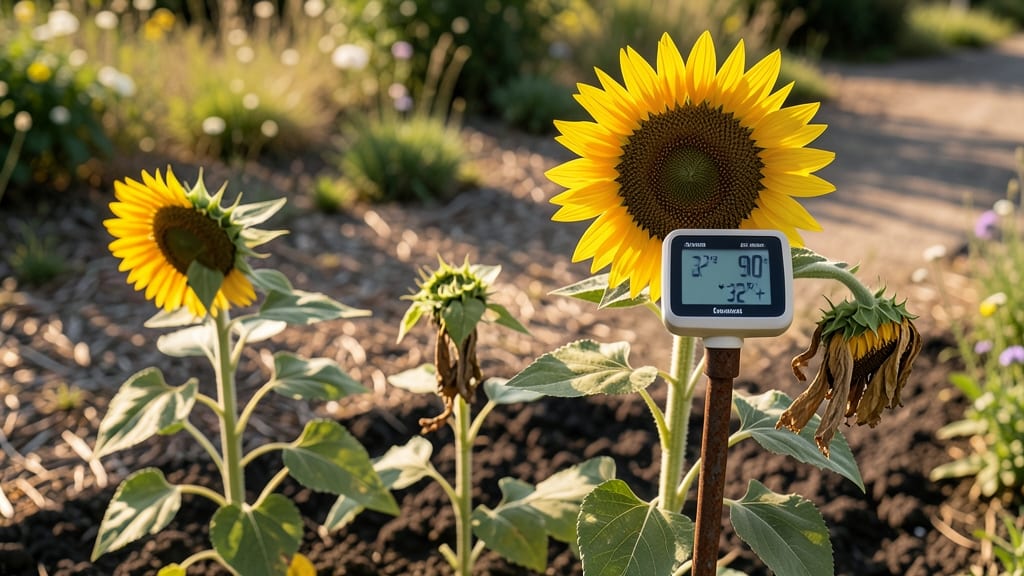
Sunflowers thrive best when you understand their sunflower temperature tolerance, which ranges ideally between 60°F and 95°F for optimal growth—but push those limits, and you’ll watch your 🌻 plants struggle—or worse, collapse.
You’ve probably planted them with big dreams of towering blooms, only to see leaves curl in the heat or stems blacken after a surprise frost. The good news? With the right strategies, you can keep your sunflowers thriving even when Mother Nature throws extreme weather your way.
From choosing heat-resistant varieties to protecting young plants from late frosts, this guide covers the temperature sweet spots for every growth stage—and what to do when things go off the rails.
You’ll learn how to spot heat stress early, shield seedlings from cold snaps, and even stretch the growing season in cooler climates. Let’s get your sunflowers standing tall, no matter what the thermometer says.
Sunflower heat tolerance limits: ideal growing temperatures & heat stress warning signs
Sunflowers thrive in warm weather, but their temperature tolerance limits are often misunderstood. While they love the sun, extreme heat can stunt growth or even kill your plants if conditions aren't just right.
I've learned the hard way that daytime temperatures above 95°F (35°C) push sunflowers to their limits, while nighttime temps below 55°F (13°C) can stress them too. Knowing these thresholds helps you plan for optimal growth and avoid common heat-related problems.
Sunflowers perform best when daytime temperatures stay between 60°F–95°F (15°C–35°C). This range supports healthy germination, vigorous stem growth, and abundant flowering. However, even within this window, prolonged exposure to high heat (consistently above 90°F/32°C) can cause heat stress symptoms like leaf curling, wilting, or premature yellowing.
I've noticed my sunflowers struggle most when daytime heat isn't followed by cooler nights.
High temperatures don't just affect sunflowers during the day—they also impact nighttime recovery. When daytime heat exceeds 90°F (32°C) without cooling nights (below 60°F/15°C), sunflowers struggle to photosynthesize efficiently.
I've observed that consistent nighttime temps above 70°F (21°C) can lead to premature flowering, reducing seed quality and yield. This is especially critical in desert climates where nighttime temps rarely drop.
One of the first heat stress warning signs I notice is leaf curling, where leaves roll inward to reduce surface area and limit water loss. If ignored, this progresses to wilting—even with adequate water—because the plant can't absorb moisture efficiently in extreme heat.
Another red flag is premature wilting of flower buds, which means the plant is diverting energy to survival rather than reproduction. In my garden, I've seen buds drop entirely when daytime temps hit 100°F (38°C) for more than a week.
Heat stress also impacts seed production dramatically. When sunflowers experience prolonged high temperatures during flowering, the pollen development suffers, leading to poor seed set or sterile seeds.
I once grew 'Russian Mammoth' sunflowers in a heatwave, and while the plants survived, their seed heads were 20% smaller and contained far fewer viable seeds. To mitigate this, I now focus on shade cloth during peak afternoon heat (2 PM–5 PM) when temps exceed 90°F.
If your sunflowers show signs of heat stress, don't panic—there are ways to help them recover. First, increase watering frequency but water deeply in the early morning to reduce evaporation.
I've found that drip irrigation works best, as it delivers water directly to the roots without wetting the leaves (which can burn in intense sun). Second, consider mulching with straw or wood chips to keep soil temps cooler and retain moisture.
This simple trick can raise soil temps by 5–10°F during heatwaves.
For gardeners in hot climates, choosing heat-tolerant varieties like 'Mordovia' or 'Autumn Beauty' can make a huge difference. These varieties handle consistent 95°F+ (35°C+) temps better than standard types.
I also recommend staggered planting: sow seeds every 2–3 weeks to ensure a continuous harvest, as later plantings often escape the worst heat. This way, you'll have sunflowers blooming in both spring and fall when temps are more moderate.
Most sunflowers are annual plants with moderate cold tolerance, but their ability to survive frost depends heavily on the variety and growth stage. While young seedlings can handle light frosts down to 28°F (-2°C), mature plants struggle below 32°F (0°C). Perennial varieties like Autumn Beauty may tolerate slightly cooler temps, but even they won't survive prolonged freezing. Frost damage often appears as blackened stems, yellowing leaves, or stunted growth—signs your sunflowers won't recover from. The key to protecting them lies in understanding their temperature thresholds and using simple, effective strategies to shield them from cold snaps.
Seedlings: 32–50°F (0–10°C) – Light frost may cause leaf damage but won't kill young plants.
Mature Plants: 32–40°F (0–4°C) – Prolonged exposure below 32°F (0°C) risks stem damage.
Fatal Threshold: Below 28°F (-2°C) – Most sunflowers die from freezing soil or air temps.
Pro Tip: If nighttime temps drop near 32°F (0°C), act fast—cover plants before damage occurs.
For annual sunflowers, the best defense is mulching. Apply a 3–4 inch layer of straw or leaves around the base to insulate roots. This method raises soil temps by 5–10°F (3–6°C), giving your plants a fighting chance against light frosts. I’ve seen this trick extend the growing season by 2–3 weeks in my USDA Zone 5b garden. If a hard freeze is forecasted (below 28°F (-2°C)), use row covers or frost blankets to trap heat. Secure the cover with bricks or stakes to prevent wind damage. For extra protection, water the soil before covering—moist ground retains heat better than dry soil. Just remember to remove covers during the day to avoid overheating. Another smart tactic is staggered planting. Sow seeds in successive batches every 2 weeks in early spring. This ensures some plants mature before frost hits, while others remain young and resilient. In my experience, this method guarantees at least one healthy harvest even in short growing seasons. For perennial sunflowers like Helianthus tuberosus (Jerusalem artichoke), focus on root protection. Mound soil or mulch around the base to shield the tuberous roots, which can survive temps down to 15°F (-9°C). Prune back dead foliage in late fall to reduce winter stress and prevent disease. With these strategies, you can extend your sunflower season and protect your plants from frost damage. The key is acting before temperatures drop—once frost hits, recovery is unlikely. Start prepping now, and you’ll enjoy tall, healthy sunflowers well into autumn! 🌻Cold hardiness of sunflowers: how to protect them from frost & freezing temperatures