
Blooming
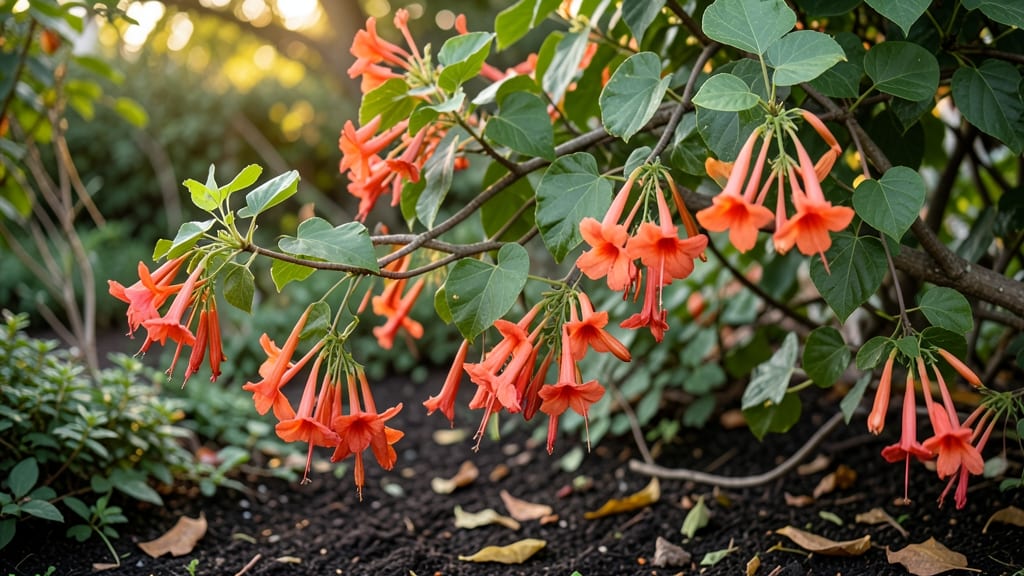
The orange trumpet vine flowering season spans from early summer through fall, with blooms that can even linger into winter in warmer zones.
Picture this: your garden bursting with vibrant orange trumpet-shaped flowers 🌺 that hummingbirds can’t resist. But here’s the catch—when those blooms arrive depends entirely on where you live. In cooler zones like 6a, expect a shorter window, while southern gardeners might enjoy year-round color with the right care.
Timing isn’t just about luck—it’s about understanding your climate, sunlight, and even how you prune. A little strategy can turn a three-month display into a six-month spectacle. Below, I’ll break down the exact months to expect blooms in your zone, plus the simple tweaks that keep your vine flowering longer.
Whether you’re planning a trellis or just want to attract pollinators, this guide ensures your orange trumpet vine puts on its best show—right when you want it.
Orange trumpet vine flowering season by USDA zone: when to expect blooms
The orange trumpet vine (Campsis radicans) is a showstopper with its fiery blooms, but its flowering window varies dramatically across USDA zones 3-11.
In warmer climates like zones 9-11, you might enjoy blooms from late spring through winter, while cooler zones like 3-5 see a shorter, summer-centric display. Understanding these patterns helps you plan companion plants and maintenance tasks for maximum impact.
Many gardeners mistakenly treat this vine as an annual, but it’s actually a semi-evergreen perennial in most zones—meaning it can regrow from its roots each year.
In zones 6-8, expect a 6-8 week bloom window starting in early summer, while zones 9-11 often see year-round blooming with minimal dormancy. Let’s break down the exact timing by zone.
| USDA Zone | Typical Bloom Start | Peak Bloom Period | Bloom Duration | Notes |
|---|---|---|---|---|
| 3-5 | Mid-June | July-August | 4-6 weeks | Cold-sensitive; may defoliate in winter |
| 6-7 | Early June | June-September | 8-10 weeks | Best blooms with winter mulch |
| 8-9 | April-May | May-October | 16+ weeks | Near-continuous blooms with pruning |
| 10-11 | February-March | March-November | Year-round (with gaps) | Minimal dormancy; prune lightly |
In zones 3-5, the orange trumpet vine often acts like an annual due to harsh winters, but with proper mulching and sheltered planting, it can survive and rebloom the next year.
The key is protecting its roots from freezing—use 6-12 inches of mulch in late fall. I’ve seen vines in zone 4 bloom again the following summer after just one winter of protection.
For zones 6-8, the longest bloom window occurs when you prune strategically. Remove spent blooms (deadheading) and lightly trim leggy growth in early spring to redirect energy into new flowers. In my zone 7 garden, this extends blooms from June through October—a full 4 months of color!
The trade-off? You’ll sacrifice some height growth, but the trade is worth it for those vibrant trumpets.
Gardeners in zones 9-11 have the advantage of year-round potential, but even here, blooming isn’t continuous. Expect heavier blooms in spring and fall, with lighter displays in summer.
The secret to maximizing blooms in warm climates? Prune after flowering to avoid removing next year’s buds, which form on new wood. I’ve trained mine to climb a pergol in zone 10, and it blooms almost nonstop with minimal intervention.
Climate plays a bigger role than most assume. In humid zones (e.g., 8a-9b), fungal diseases can stress the vine, reducing blooms. I’ve found that raising soil beds and improving drainage helps.
Meanwhile, in arid zones (e.g., 9a-11), the vine thrives with occasional deep watering—overwatering here leads to fewer blooms. Always match your care to your local climate, not just the zone.
One common misconception is that orange trumpet vine blooms only once per year. While true in cooler zones, in warmer climates, it can produce multiple flushes if given the right conditions.
For example, my vine in zone 9 blooms in February-March, again in June-July, and even in September before dormancy. The trick? Feed lightly in early spring and avoid heavy pruning.
If you’re planning a hummingbird garden, time your vine’s blooms with your local hummingbird migration. In zones 6-8, aim for June-August when these birds are most active. Pair it with bee balm or
How to extend your orange trumpet vine’s flowering season naturally
The orange trumpet vine (Campsis radicans) typically blooms from mid-spring to early fall, but with the right care, you can coax it into flowering earlier in spring and later into fall—sometimes even through winter in mild climates.
The key lies in pruning strategies, soil health, and watering consistency. Let’s explore how to maximize those vibrant orange trumpets all season long.
First, understand that pruning timing is everything. If you prune at the wrong time, you might cut off next year’s blooms or stress the vine.
The best time to prune is late winter or early spring (just before new growth starts) to remove dead or weak wood while preserving next year’s flower buds. Avoid heavy pruning in fall or winter, as this can reduce flowering potential.
Here’s a quick comparison of organic vs. synthetic methods to extend your vine’s blooming season—choose what works best for your garden’s philosophy.
- Improves soil health long-term
- Encourages natural vigor without chemicals
- Safe for pollinators and wildlife
- Slower results (3-6 months to see impact)
- Requires more frequent attention
- Less predictable for immediate blooms
- Faster results (weeks) for extended blooms
- Precise nutrient control for flowering
- Works well in poor or compacted soil
- Can burn roots if overused
- Not eco-friendly for pollinators
- Requires reapplication frequently
For organic season extension, focus on compost-rich soil and mulching. Add a 2-3 inch layer of compost in early spring to provide slow-release nutrients, and mulch with wood chips or straw to retain moisture and regulate soil temperature.
This helps the vine bloom earlier and stay vibrant longer. Pair your orange trumpet vine with companion plants like salvia or bee balm—these attract pollinators, which boost flower production naturally.
If you prefer synthetic methods, use a balanced fertilizer (like 10-10-10) in early spring and mid-summer to support blooming. Apply it early in the morning to avoid burning the roots, and water deeply afterward.
For a quick boost, try a phosphorus-heavy fertilizer (like 5-10-10) in late summer to encourage fall blooms. Just be cautious—over-fertilizing can lead to leafy growth at the expense of flowers.
Don’t forget watering consistency! While orange trumpet vines are drought-tolerant once established, they need deep, infrequent watering (about 1-2 inches per week) during active growth and flowering.
Water early in the morning to reduce evaporation and prevent fungal diseases. In hot climates, you may need to water every 5-7 days to keep those blooms coming.
With these natural strategies, your orange trumpet vine can flower from late spring through early fall—and with a little extra care, you might even catch a few winter blooms in milder zones.
Start with one or two methods this season, observe how your vine responds, and adjust as needed. Your garden will thank you with months of stunning color! 🌺