
How To
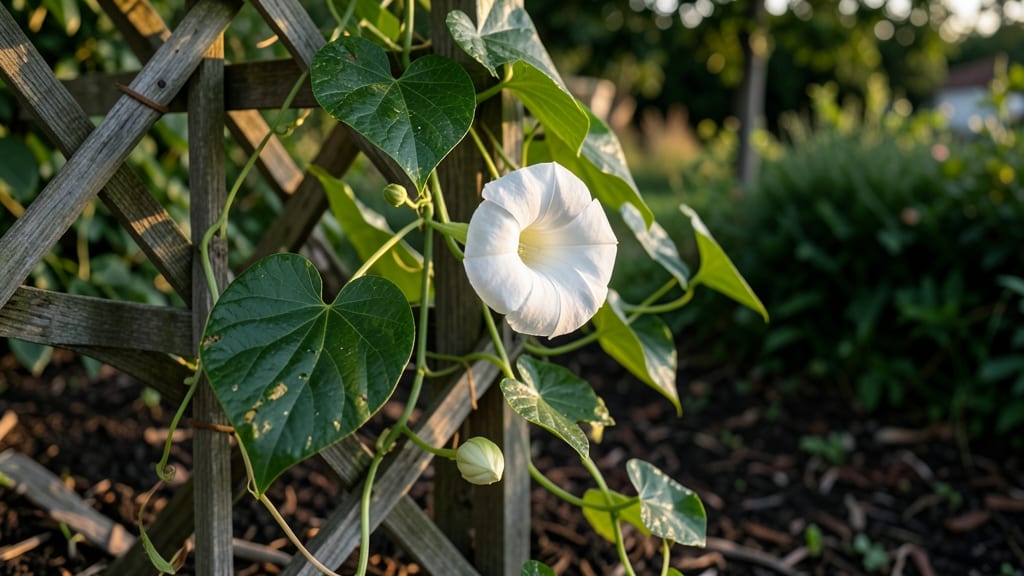
Moonflower vines can grow up to 20 feet tall with the right support, making them a dramatic choice for fast vertical interest in your garden.
If you’ve ever dreamed of a backyard canopy dripping with fragrant, moonlit blooms, the moonflower (Ipomoea alba) could be your perfect fast-growing vine—but first, you need to know how tall it can climb before planning your garden layout.
This quick-climbing annual (or short-lived perennial in warm zones) shoots up 6–10 inches per week once established, so without proper trellising, it’ll sprawl aggressively across your fence or deck.
Below, I’ll break down how to maximize its height—from choosing the right trellis to pruning tips that keep it blooming at the top while you’re still reaching for the highest branches.

Moonflower vine height: how tall can it grow in ideal conditions?
If you’ve ever dreamed of a backyard canopy dripping with fragrant, moonlit blooms, the moonflower (Ipomoea alba) could be your perfect fast-growing vine—but first, you need to know how tall it can climb before planning your garden layout.
This annual vine is a night-blooming beauty that thrives when given the right conditions, including strong support structures and full sun exposure. With proper care, moonflowers can reach heights that will leave your neighbors in awe.
The maximum height of a moonflower vine depends on several factors, including the support structure you provide and the climate conditions in your region. In ideal scenarios, these vines can climb up to 15–20 feet when given a sturdy trellis, fence, or pergola.
However, without adequate support, they may sprawl out horizontally, reaching only 6–10 feet in height. Understanding these growth patterns is key to maximizing your moonflower’s vertical potential.
Key factors that influence moonflower height include:
- Sunlight exposure: At least 6–8 hours of full sun per day
- Support structure: A trellis or fence for climbing
- Soil quality: Well-draining, nutrient-rich soil
- Watering consistency: Regular deep watering during dry spells
Moonflowers are annual plants, meaning they complete their life cycle in one growing season. In their first year, you can expect 6–10 feet of growth if planted early in the season and given proper care.
By mid-summer, with consistent watering and sunlight, they’ll start climbing vigorously, reaching their peak height of 15–20 feet by late summer or early fall. This rapid growth makes them a favorite for quick garden transformations.
One of the most critical aspects of maximizing moonflower height is providing a sturdy support structure. A trellis or fence is ideal because moonflowers use their tendrils to grip and climb.
Without support, they’ll sprawl along the ground, which can limit their height and make them more susceptible to pests and diseases. Install your trellis at planting time to give the vine something to latch onto immediately.
Another factor that affects moonflower height is soil quality. These vines thrive in well-draining, nutrient-rich soil with a pH between 6.0 and 7.0. Amending your soil with compost before planting will give your moonflower the nutrients it needs to grow tall and strong.
Avoid heavy clay soils, which can suffocate roots and stunt growth. If your soil is sandy, consider adding organic matter to retain moisture and nutrients.
Consistent watering practices also play a role in how tall your moonflower grows. While they’re drought-tolerant once established, young plants need regular watering to encourage strong root development. Water deeply every 3–5 days, especially during hot, dry periods.
Avoid overhead watering, which can lead to fungal issues. Instead, water at the base of the plant to keep the foliage dry and healthy.
If you’re growing moonflowers in a container or small garden, you may need to prune them to control their height and prevent overcrowding. However, if space isn’t an issue, let them climb freely to achieve their full 15–20 foot potential.
Just be prepared for a dramatic vertical display that will transform your garden into a moonlit paradise every evening.
For those in cooler climates, moonflowers may not reach their maximum height due to shorter growing seasons. In these areas, start seeds indoors 4–6 weeks before the last frost to give them a head start.
Transplant them outdoors after the soil has warmed to at least 70°F, ensuring they have plenty of time to climb and bloom before the first frost.
In summary, the maximum height of a moonflower vine is 15–20 feet when given ideal conditions—full sun, strong support, and well-draining soil. With these factors in place, you’ll be rewarded with a stunning vertical garden that blooms under the moonlight.
Just remember to provide the right support early and keep the soil consistently moist for the best results.
How to train moonflower for maximum height: pruning and support tips
Moonflowers (Ipomoea alba) are nature’s vertical artists, capable of reaching 15–20 feet with the right support—but only if you train them properly. Without guidance, these fast-growing vines sprawl, wasting energy on weak stems instead of climbing skyward.
The key lies in combining proper trellising with strategic pruning to direct their growth upward.
First-year vines typically hit 6–10 feet, while mature plants can double that height if given strong support. The secret? Installing a trellis or sturdy fence at planting time and gently weaving the tendrils onto the structure as they emerge.
This mimics their natural climbing behavior and prevents tangled messes later.
🌱
Step-by-Step Moonflower Training Guide
-
Step 1: Install Support Early
Plant moonflower seeds near a 6-foot trellis or chain-link fence as soon as soil warms to 70°F+. Use galvanized wire or bamboo stakes for lightweight options.
-
Step 2: Guide Tendrils Weekly
Every 7–10 days, gently wrap the vine’s tendrils around the trellis using soft twine. Avoid pulling—let the vine climb naturally to prevent stem damage.
-
Step 3: Prune Strategically
Trim side shoots that grow horizontally to redirect energy upward. Focus on removing more than 30% of foliage only after the first 5 feet of growth.
-
Step 4: Fertilize for Height
Apply a balanced 5-10-10 fertilizer every 4–6 weeks during summer to boost vertical growth. Avoid high-nitrogen feeds—they promote leafy growth over climbing.
-
Step 5: Winter Care for Next Year
In Zone 6a or warmer, cut back vines to 12 inches in late fall. Mulch heavily to protect roots—this encourages taller, stronger growth the following spring.
One common mistake gardeners make is waiting too long to prune. If you let moonflowers sprawl for more than 4 weeks, their stems become woody and difficult to train upward.
Another pitfall? Overcrowding the trellis with too many plants—each vine needs at least 3 feet of vertical space to thrive.
For maximum height, pair your trellis with a drip irrigation system to keep roots consistently moist. Moonflowers respond dramatically to steady watering, often adding 6–10 inches per week when conditions are ideal. Just remember: evening watering is best to prevent fungal issues on the lush foliage.
With these techniques, you’ll transform your moonflower from a ground-hugging tangle into a 20-foot vertical masterpiece—perfect for creating a romantic night-blooming canopy over patios or pergolas. The key is patience and consistency, but the results are worth every tender twist of those silvery tendrils. 🌙