
Flowers
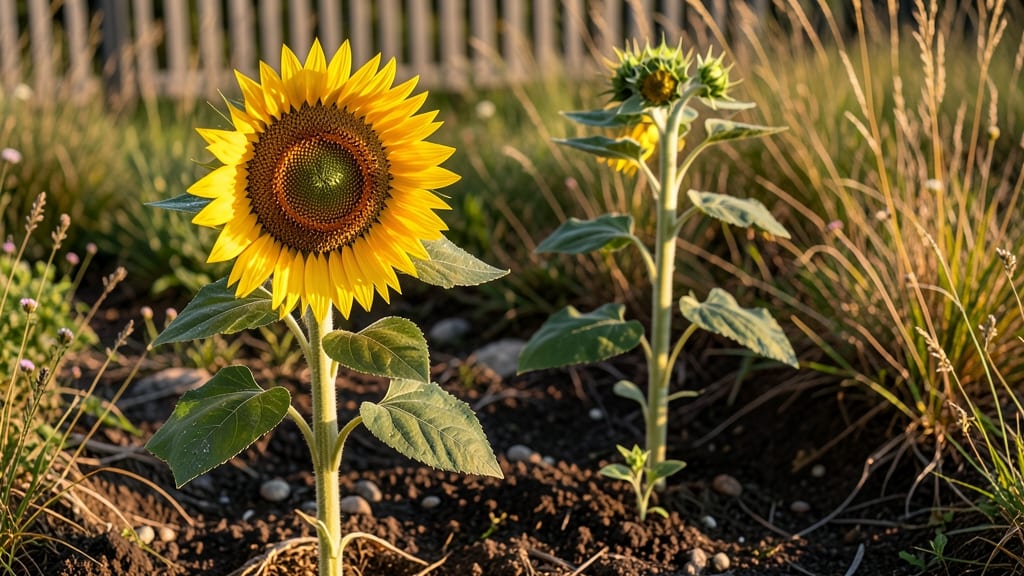
Sunflowers grow quickly from tiny seeds to towering 10-foot giants in just 80-120 days, making them one of the fastest plants to reach maturity.
Picture this: you plant a seed in May, and by late summer, you’re harvesting seeds from a sunflower 🌻 that could shade your picnic blanket. That speed isn’t just luck—it’s science, and knowing the milestones helps you set up for success.
From sprouts peeking through the soil in 5-10 days to stems shooting up 2-3 inches per day in ideal conditions, sunflowers hit key growth stages faster than most garden plants. But speed depends on your variety, soil, and sunlight—so let’s break down what to expect month by month.
You’ll discover how to push your sunflowers to their fastest potential, avoid common slowdowns, and even pick the right variety for a record-breaking harvest in just a few months.

Sunflower growth timeline: height milestones by month
Watching sunflowers grow is like witnessing a living time-lapse. These cheerful giants can sprout in days and reach towering heights in just 3 months. Understanding their growth timeline helps you set realistic expectations and troubleshoot if progress seems slow.
From the first cotyledon leaves to full bloom, each stage reveals how quickly sunflowers grow when given the right conditions.
Your sunflower's growth speed depends on three key factors: variety selection, climate conditions, and soil quality. Dwarf varieties like 'Teddy Bear' may hit 3 feet in 60 days, while giants like 'Russian Mammoth' can surge 12 feet in 120 days.
Even within the same variety, a warm spring can accelerate growth by 2-3 weeks compared to cooler seasons.
Let's break down the month-by-month height milestones you can expect, along with what to watch for at each stage. This timeline assumes average conditions—6-8 hours of sun, well-draining soil, and consistent moisture. Adjust expectations if your climate or care routine differs significantly.
In the first week, you'll spot the tiny green shoots breaking through the soil—this is your germination stage. If your seeds haven't sprouted by 10-14 days, check soil moisture and temperature.
Sunflowers need soil temps above 55°F (13°C) to germinate properly. Once sprouted, keep the soil consistently moist but not waterlogged to encourage rapid seedling growth.
By 2 weeks, your sunflower will have grown 4-12 inches tall with true leaves replacing the initial cotyledons. This is when the stem begins elongating rapidly.
If your seedlings look leggy or pale, they're not getting enough sunlight. Move them to a sunnier spot immediately—sunflowers wilt dramatically without adequate light.
At 1 month, your sunflower will have surged to 1-3 feet tall, with a thickening stem and mature leaves. This is the vegetative growth phase, where the plant focuses on building leaf surface area for photosynthesis.
During this stage, fertilizing lightly with a balanced 10-10-10 can boost growth. Avoid heavy nitrogen, which promotes leafy growth over height.
When your sunflower reaches 2 months, it will be 3-7 feet tall and entering the bud formation stage. You'll notice the flower bud forming at the top of the stem.
Growth may slow temporarily as the plant redirects energy to developing the bloom. This is a critical time for support—tall varieties may need staking to prevent wind damage.
The final growth spurt happens in month 3, when your sunflower reaches its full height of 6-16 feet and blooms completely. Some varieties, like 'Russian Giant', can grow up to 3 feet in
Fastest-growing sunflower varieties and how to maximize growth speed
If you're eager to see sunflowers sprout and soar in record time, choosing the right fast-growing varieties is your first step. Some sunflower types mature in as little as 60 days, while others take twice that long.
The key lies in selecting hybrids bred for speed and giving them ideal growing conditions to unlock their potential. Let's explore the fastest options and proven strategies to turbocharge your sunflowers' growth.
For gardeners short on time, 'Moulin Rouge' stands out as a 60-day champion, reaching maturity faster than most. This variety produces deep red blooms and grows up to 5 feet tall, making it perfect for quick color and height.
Meanwhile, 'Russian Giant' may take slightly longer (around 90 days) but rewards you with 12-foot giants—ideal if you want both speed and stature. 'Autumn Beauty' offers a 75-day timeline with multi-colored blooms, blending aesthetics with efficiency.
| Variety | Days to Maturity | Height | Bloom Color | Growth Tip |
|---|---|---|---|---|
| Moulin Rouge | 60 days | 5 ft | Deep red | Plant in full sun for fastest sprouting |
| Russian Giant | 90 days | 12 ft | Yellow | Use stakes for support in windy areas |
| Autumn Beauty | 75 days | 5-6 ft | Multi-colored | Mulch to retain moisture and speed growth |
| Teddy Bear | 65 days | 3-4 ft | Yellow with red centers | Great for containers and small gardens |
To maximize growth speed, start with well-draining soil rich in organic matter. Amend your garden bed with compost or aged manure before planting to provide essential nutrients. Sunflowers thrive in loamy soil with a pH between 6.0 and 7.5.
If your soil is heavy clay or sandy, mix in peat moss or perlite to improve structure and drainage.
Watering plays a critical role in accelerating growth. Young sunflowers need consistent moisture—about 1-2 inches per week—especially during their first 4-6 weeks of life. Water deeply in the morning to reduce evaporation and prevent fungal diseases.
Once established, sunflowers become drought-tolerant, but reducing water stress early on helps them bolt upward faster.
Sunlight is non-negotiable for speedy growth. Sunflowers require full sun (6-8 hours daily) to reach their maximum height quickly. If your garden lacks direct sunlight, consider using reflective surfaces like white walls or mirrors to bounce extra light onto your plants.
In shadier conditions, growth slows significantly, and stems may become weak and leggy.
For an extra growth boost, fertilize lightly with a balanced 10-10-10 fertilizer when seedlings emerge and again when they reach 12 inches tall. Avoid over-fertilizing, as this can lead to excessive foliage at the expense of flower production.
A handful of compost around the base of each plant also provides slow-release nutrients to support rapid vertical growth.