
Flowers
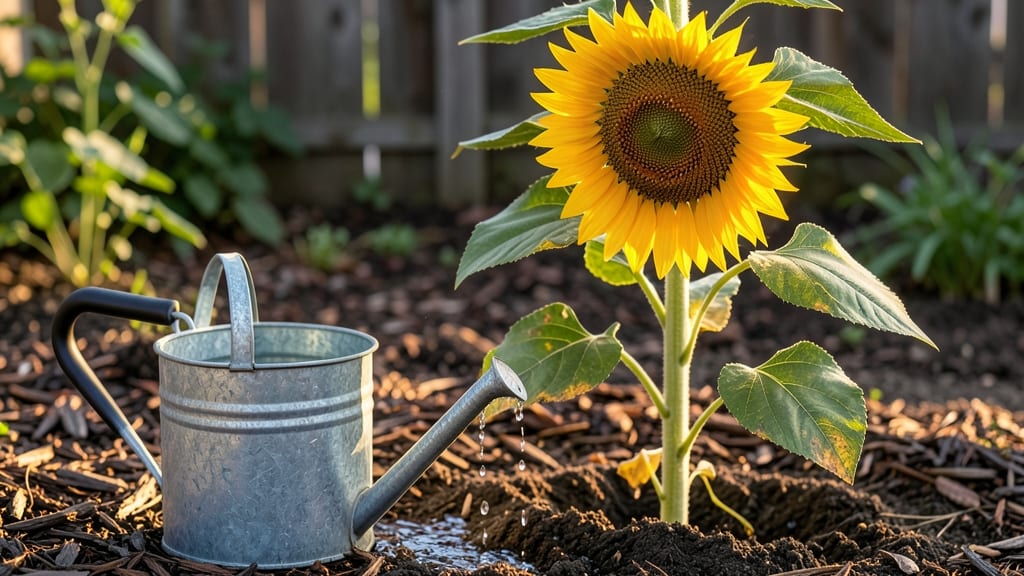
To water sunflowers properly, you’ll need to know how often should sunflowers be watered—deep soaks every 3-5 days once they’re established, as too little or too much can turn your 🌻 giants into wilting disappointments.
Picture this: you’ve just planted your sunflower seeds in USDA Zone 6a, and the soil feels damp after watering. But by day three, the top inch is bone-dry. That’s the tightrope act sunflowers demand, especially in April-May when they’re pushing through the soil.
Too much water drowns their roots; too little stunts their growth before they even reach 4 feet.
Here’s the secret: sunflowers don’t just want a quick drink. They crave moisture that reaches 6-12 inches deep, encouraging roots to dive down where they can access water during dry spells.
In summer’s peak heat, you might need to water every 2-3 days, but in cooler months, once a week keeps them happy.
In this guide, I’ll break down exactly how often to water at each growth stage, how to tell if you’re overdoing or underdoing it, and the game-changer mulching trick that cuts watering needs by half. Let’s get those sunflowers towering toward the sky without a single wasted drop.
Sunflower watering schedule by growth stage: seedlings to full bloom
Sunflowers may look like they can handle anything, but their watering needs change dramatically from seedling to full bloom. Too much water early on can drown delicate roots, while too little during flowering will shrink those iconic yellow blooms.
Let’s break down the perfect watering schedule for each stage, so your sunflowers grow tall, strong, and show-stopping.
Your sunflower’s watering routine should mirror its growth phases. Germination requires consistent moisture, while vegetative growth demands deep hydration to support rapid stem elongation. Finally, during flowering, you’ll adjust frequency to prevent stress.
Climate plays a role too—hot, dry summers need more frequent watering, while cooler months can stretch intervals. Let’s dive into the specifics.
| Growth Stage | Watering Frequency | Soil Moisture Goal | Climate Adjustments |
|---|---|---|---|
| Germination (Days 1-7) | Daily (light misting) | Consistently damp | Humid climates: reduce to every other day |
| Seedling (Weeks 2-4) | Every 2-3 days | Top 1-2 inches moist | Hot/dry: daily shallow water |
| Vegetative Growth (Weeks 5-8) | Every 3-5 days | Deep watering (6+ inches) | Rainy seasons: skip if soil is soggy |
| Flowering (Weeks 9-12) | Every 5-7 days | Top 3-4 inches moist | Drought: deep water every 4 days |
| Maturity (Weeks 13+) | Weekly or bi-weekly | Dry top 2 inches | Winter: reduce to monthly |
During the germination phase (first 7 days), your sunflower seeds need daily light misting to keep soil consistently damp. Overwatering here can cause seed rot, so use a spray bottle or drip irrigation to avoid soggy conditions.
Once sprouts emerge, switch to shallow watering every 2-3 days, ensuring the top 1-2 inches of soil stay moist but not waterlogged.
As your sunflowers enter vegetative growth (weeks 5-8), they’ll shoot up rapidly. This is when deep watering becomes critical—aim to saturate the soil 6+ inches deep every 3-5 days.
Use a moisture meter or stick your finger in the soil; if it’s dry past 2 inches, it’s time to water. Mulching with straw or wood chips will help retain moisture during this thirsty phase.
When buds form and flowers begin to open (flowering stage), reduce frequency to every 5-7 days but increase depth. Sunflowers are surprisingly drought-tolerant once established, so let the top 3-4 inches dry out between waterings.
This prevents bud blast (when flowers drop before opening) and encourages stronger stems. In hot climates, morning watering is key to minimize evaporation.
By the time your sunflowers reach maturity (weeks 13+), they’ll need far less water. Cut back to weekly or bi-weekly waterings, focusing on keeping the top 2 inches of soil slightly moist.
Overwatering mature plants can weaken stems, making them prone to lodging (falling over). In winter, reduce to monthly waterings or only when soil is completely dry.
Adjust your schedule based on weather and soil type. Sandy soil drains quickly, so water more frequently, while clay holds moisture longer. During heatwaves, increase frequency by 1-2 days, and reduce by half in rainy seasons.
Always water at the base of the plant in the morning to prevent fungal diseases like powdery mildew, which thrives in damp foliage.
Pro tip: Use a soaker hose or drip irrigation for even moisture distribution. Avoid overhead sprinklers, which can damage leaves and attract pests. With this stage-by-stage approach, your sunflowers will grow taller, healthier, and more vibrant—ready to turn heads in your garden.
🌻
Signs of overwatering vs. underwatering sunflowers: how to fix common mistakes
Sunflowers 🌻 may seem low-maintenance, but their water needs are often misunderstood. Overwatering or underwatering can both spell disaster—wilting leaves, yellowing stems, or even root rot. The key is learning to read your plants' subtle signals and adjusting your watering routine accordingly.
First, let's tackle the biggest misconception: sunflowers hate soggy roots. Unlike some tropical plants, they thrive in well-draining soil and prefer to dry out slightly between waterings. But how do you know when you've crossed the line? Here's where visual cues become your best friend.
🚨 Overwatering signs: Yellowing leaves (especially lower ones), mushy stems when pressed, and a foul odor from the soil. These are red flags for root rot, a fungal disease that thrives in waterlogged conditions. If you notice these symptoms, act fast—stop watering immediately and let the soil dry out completely before resuming.
Watering Sunflowers: Pros & Cons
Pros of Proper Watering
- 🌱 Deep roots develop faster
- 🌿 Taller stems with better support
- 💧 Larger blooms and seed heads
- ✅ Disease resistance improves
Cons of Improper Watering
- 🔴 Root rot from overwatering
- 🌱 Stunted growth from underwatering
- 🌿 Yellow leaves (over or under)
- ❌ Fungal diseases spread easily
Adjustments by Soil Type
- 🏜️ Sandy soil: Water every 2-3 days (dries fast)
- 🏗️ Clay soil: Water every 5-7 days (retains moisture)
- 🌧️ Rainy season: Reduce by 50%
Now, let's address underwatering. If your sunflower's leaves feel crispy to the touch or droop dramatically in the heat of the day, it's time to water. Unlike wilting from overwatering, underwatered sunflowers often recover quickly after a deep drink.
The key is to water deeply—aim for 1-2 inches of moisture per watering session to encourage strong root development.
Your soil type plays a huge role in determining watering frequency. In sandy soil, water drains quickly, so you'll need to water more frequently—every 2-3 days during hot weather. Conversely, clay soil holds moisture longer, so you can stretch waterings to every 5-7 days.
Always check the soil's moisture level by sticking your finger about 2 inches deep—if it's dry, it's time to water.
Don't forget to consider the weather conditions. During heatwaves, increase your watering frequency by 30-50%, but always water in the early morning to prevent fungal growth. In cooler months, reduce watering to every 7-10 days as the plant's needs decrease.
Pay attention to your local forecast and adjust accordingly—your sunflowers will thank you with vibrant blooms and robust stems.
If you're still unsure, perform the finger test: Insert your finger into the soil near the base of the plant. If the top 1-2 inches feel dry, it's time to water.
This simple trick helps you avoid both overwatering and underwatering, ensuring your sunflowers stay healthy and happy throughout their growth cycle. 🌱