
Flowers
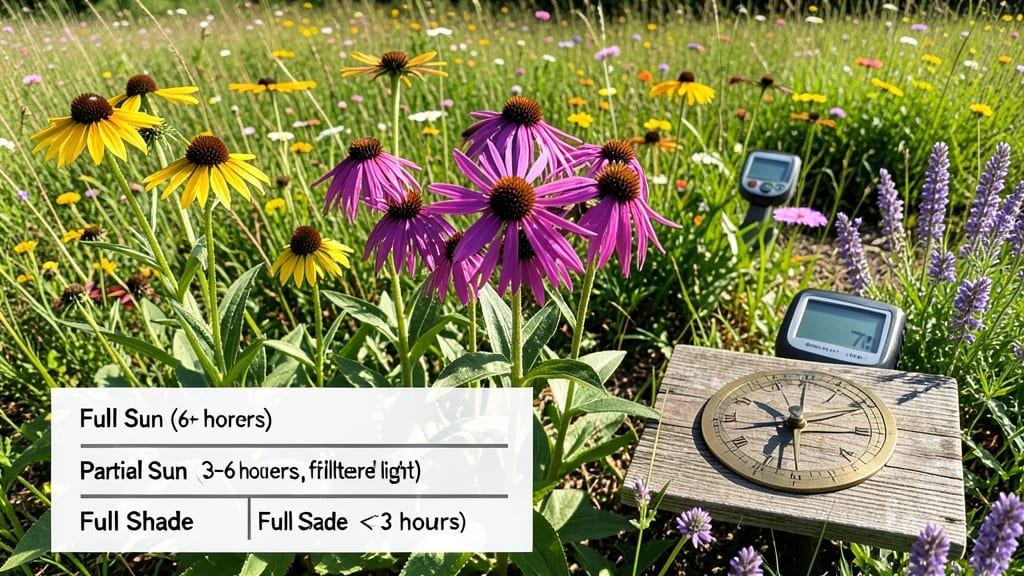
How much sun do wildflowers need? They require between 4 and 8 hours of sunlight daily to thrive, but the exact amount depends on the species and your climate zone.
Struggling to keep your wildflower garden vibrant? Sunlight is the #1 factor determining whether your 🌼 wildflowers thrive or wilt—yet most gardeners get it wrong.
Some wildflowers, like black-eyed Susans and coneflowers, bask in full sun, while others, such as columbine and trillium, prefer partial shade. Even the same species may need adjustments in hot, dry climates versus cooler, humid regions.
In this guide, I’ll break down the sunlight needs by type, regional tweaks, and how to spot the perfect spot in your garden—so you can finally enjoy a wildflower display that lasts all season.

Wildflower sunlight requirements by type: full sun vs partial shade vs deep shade
Sunlight is the secret ingredient for wildflower success—yet many gardeners accidentally plant shade-loving varieties in scorching sun or full-sun species in dark corners. The right light exposure determines whether your wildflowers burst into color or struggle to survive.
Let’s break down the three key sunlight categories and the native wildflowers that thrive in each.
Understanding your garden’s microclimates is crucial. A spot near your house might get 6 hours of sun, while a shady corner under trees could receive less than 2 hours.
Matching wildflowers to these conditions ensures vibrant blooms year after year. Let’s explore the ideal sunlight ranges for wildflowers and how to spot the perfect spot in your garden.
Full-sun wildflowers like black-eyed Susans and coneflowers need at least 6 hours of direct sunlight daily to produce their signature vibrant blooms. These hardy species often thrive in dry, well-draining soil and are perfect for sunny meadows or south-facing garden beds.
If your wildflowers look leggy or produce few blooms, they’re likely not getting enough sun.
For partial shade lovers like columbine and lupine, aim for 3 to 6 hours of sunlight, ideally in the morning or late afternoon. These wildflowers often grow naturally under deciduous trees, where they receive dappled light.
Plant them near your home’s east or west side for ideal conditions, or under young trees that haven’t yet fully shaded the area.
Deep-shade wildflowers, such as trillium and wild ginger, are the unsung heroes of woodland gardens. They thrive in areas with less than 3 hours of sunlight and often grow on forest floors or north-facing slopes.
These delicate blooms reward patience with stunning, often fragrant flowers. If you’re planting in a shady spot, choose native species adapted to your region’s low-light conditions.
Observing your garden’s natural light patterns is key. Use a sunlight tracker or simply watch how shadows move throughout the day. Mark spots that receive full sun, partial shade, or deep shade to plan your wildflower layout.
For example, a south-facing slope will get intense afternoon sun, while a north-facing corner might stay in shade all day.
One common mistake is assuming all wildflowers love sun. While many do, shade-tolerant species will wilt or fail to bloom if planted in full sun. Conversely, full-sun wildflowers planted in deep shade become weak and prone to disease.
Always check a plant’s natural habitat—prairie wildflowers need sun, while forest wildflowers crave shade.
If your garden has mixed light conditions, create layers with sun-loving plants in open areas and shade-tolerant varieties underneath trees. This approach mimics natural ecosystems and ensures year-round interest. For instance, pair coneflowers in full sun with columbine at their base, where they’ll receive filtered light.
Pro tip: Start small with a wildflower trial bed to test sunlight conditions. Plant a few full-sun, partial-shade, and deep-shade species in different spots and observe their growth over a season. This hands-on approach helps you fine-tune your garden’s layout for maximum blooms.
Remember, even within a sunlight category, soil moisture and climate play a role. A full-sun wildflower in the arid Southwest may need less water than one in a humid climate. Always pair sunlight requirements with your local growing conditions for the best results.
With the right sunlight match, your wildflowers will reward you with bold colors, long bloom times, and minimal care. Happy planting—and let your garden shine! 🌻
How climate zones affect wildflower sunlight needs: adjusting for heat, humidity, and altitude
Climate zones dramatically change how much sunlight wildflowers need to thrive. The USDA hardiness zone you're in isn't just about frost tolerance—it also dictates how intense sunlight becomes.
In arid Zone 9 (like Arizona), wildflowers need 6+ hours of sun to avoid scorching, while in humid Zone 8 (like Georgia), partial shade protects them from wilting.
Even altitude matters: wildflowers at 5,000 feet receive 20% more UV radiation than at sea level, requiring adjustments to their sun exposure.
Regional climates further complicate things. Coastal areas with marine layer fog (think California's Zone 10) demand shade-tolerant varieties like California poppies, while hot, dry deserts (like New Mexico's Zone 7) reward full-sun lovers such as blanket flowers with vibrant blooms.
Without accounting for these factors, you risk sunburned leaves or leggy, weak growth—both signs your wildflowers aren't getting the right light.
In Zone 3-5, where winters are harsh, I prioritize early-blooming wildflowers like crocus and hepatica that tolerate 3-4 hours of sun in partial shade. These species escape late frosts while still getting enough light to flower.
Meanwhile, in Zone 9-11, I opt for heat-loving natives like gaillardia and pentstemon, which thrive in full sun and drought conditions. The key is matching the wildflower's native habitat to your microclimate.
Altitude throws another wrench into the mix. At 5,000 feet or higher, wildflowers receive up to 30% more UV radiation than at sea level. This means even sun-loving species may need afternoon shade to prevent leaf scorch.
For example, Indian paintbrush, a full-sun native, might struggle in direct afternoon sunlight at high elevations. Instead, plant it where it gets morning sun and afternoon shade from nearby shrubs.
Coastal gardeners face unique challenges too. Marine layer fog can block up to 50% of sunlight during critical growing months. In these areas, partial shade (3-4 hours of sun) is ideal for wildflowers like lupine and sword fern.
To compensate, I often use reflective mulches or light-colored gravel to bounce extra light onto plant foliage. This mimics the dappled sunlight found in their natural coastal habitats.
Adjusting for these climate factors isn't just about survival—it's about vibrant blooms. When wildflowers get the right sunlight for their zone, they produce larger flowers, longer bloom times, and better resilience to pests. Start by observing your garden's sun