
Light Requirements
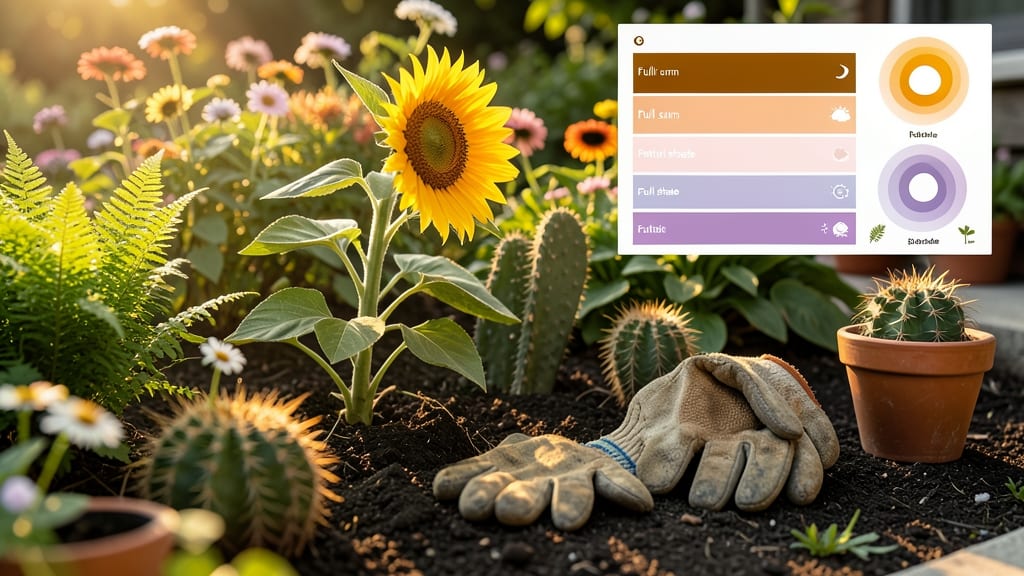
Flowers need sunlight to thrive, and the right amount makes all the difference between vibrant blooms and sad, sparse stems.
Struggling to keep your flowers blooming? The right amount of sunlight can mean the difference between vibrant, healthy blooms and wilted disappointment—yet most gardeners get it wrong.
Too little light and your 🌸 flowers stretch toward the sky, growing weak and leggy. Too much, and they burn under the midday sun. But here’s the good news: with a few simple adjustments, you can give your plants exactly what they need.
Below, I break down the exact sunlight hours for popular flowers, how to spot signs of over- or under-exposure, and easy fixes to keep your garden thriving all season long.

Sunlight requirements for popular flowers: full sun vs. partial shade breakdown
Understanding how much sunlight your flowers need is the secret to a thriving garden. Full sun means 6-8+ hours of direct sunlight daily, while partial shade provides 3-6 hours with filtered light. Getting this wrong leads to weak stems, sparse blooms, or even plant death.
Let’s break down the exact sunlight needs for your favorite flowers so you can give them the perfect growing conditions.
Most gardeners assume all flowers love sun, but that’s a myth. Sunflowers and marigolds thrive in full sun, while impatiens and fuchsias wilt under too much light. Even roses have specific needs—some varieties need full sun, while others prefer partial shade.
Below, we’ll classify popular flowers by their sunlight requirements and provide a clear comparison table to help you plan your garden layout.
🌻 Pro Tip: Use a sunlight meter or observe your garden’s light patterns before planting. South-facing areas get the most sun, while north-facing spots stay shadier.
Notice how sunflowers and marigolds demand full sun, while impatiens and fuchsias thrive in partial shade. Even roses and petunias have flexible needs, making them great for mixed-light gardens.
If your garden has limited sun, opt for shade-tolerant varieties like coleus or begonias, which handle 3 hours or less of direct light.
🌿 Key Insight: Morning sun is gentler than afternoon sun, which can scorch leaves. Place heat-sensitive flowers like lilies in morning sun with afternoon shade.
For container gardens, rotate pots every few weeks to ensure even light exposure. Terracotta
How to adjust sunlight for different flower types: signs of over/under-exposure
Even the hardiest flowers can suffer when sunlight exposure is off. Too much sun causes leaf scorch and wilting blooms, while too little leads to leggy stems and fewer flowers. The key is recognizing the signs early and adjusting before damage becomes permanent.
I’ve seen roses turn crispy from afternoon sun and impatiens stretch painfully toward a distant window—both fixable with simple tweaks.
Start by observing your plants daily. Yellowing leaves on sun-loving flowers like marigolds or zinnias often signal over-exposure, while pale, sparse blooms on shade plants like begonias or coleus mean they’re craving more light.
The good news? Most issues can be resolved with pruning, shade cloths, or even relocating pots. Let’s break down how to diagnose and fix these problems before your garden loses its glow.
⚠️ Sunlight Stress Warning Signs
Too much sun causes crispy leaf edges and bleached petals, while too little leads to weak stems and fewer blooms. Full-sun flowers (6+ hours) need morning sun + afternoon shade in hot climates. Partial-shade plants (3-6 hours) thrive under dappled light or filtered sun.
🌱 Pro Tip: Move pots gradually—sudden changes shock plants!
For over-exposed flowers, prune the most damaged leaves and move them to dappled shade immediately. Use 30-50% shade cloth if relocating isn’t an option—this filters harsh rays while maintaining light levels.
I’ve saved lavender from sunburn by placing it under a sheer fabric canopy during peak afternoon heat. Water deeply in the morning to help stressed plants recover faster.
Under-exposed flowers need a gentler light boost. Rotate potted plants weekly to ensure even growth, or place them on a south-facing windowsill for 3-4 extra hours of light. If indoors, supplement with a grow light 12-14 hours daily.
My African violets went from sparse blooms to lush clusters after adding a LED grow bulb just 6 inches above them.
Seasonal adjustments are crucial too. In summer, acclimate plants slowly to full sun by increasing exposure over 2 weeks. Conversely, bring tender perennials like caladiums indoors before frost to prevent light deprivation.
I mark my calendar for September 15th—the day I start moving heat-sensitive flowers to protected spots or under greenhouse covers.
Don’t forget about container size and root competition. Crowded roots struggle to access water and nutrients, making plants more sensitive to light stress. Repot overgrown flowers into containers 2 inches larger and use well-draining soil to prevent root rot.
My petunias now bloom nonstop because I upgraded their pots and added perlite to improve aeration.
With these adjustments, your flowers will rebound quickly. Start with the most obvious signs—leaf color, stem strength, and bloom frequency—and act within 3-5 days to avoid permanent damage.
Soon, your garden will be the envy of the neighborhood, with vibrant blooms and healthy foliage all season long. 🌿