
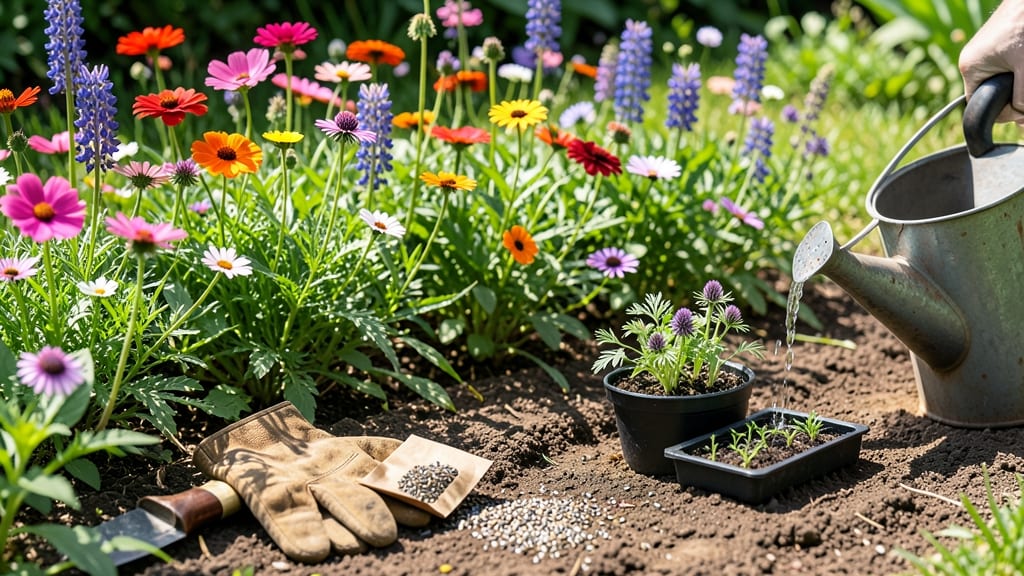
How Long for Wildflowers to Bloom From Seed: Exact Weeks by Fastest Varieties

Flowers

How Long for Wildflowers to Bloom From Seed: Exact Weeks by Fastest Varieties

Wildflowers bloom from seed in as few as 4 weeks for the fastest varieties, but many take 6 months to show their first vibrant 🌼 colors.

Picture this: you’ve scattered your seeds in early spring, dreaming of a meadow bursting with color by summer. But what if I told you some wildflowers—like cosmos and zinnias—can surprise you with blooms in just 30 to 45 days?

Meanwhile, others, like poppies or lupines, might leave you waiting until late summer or even next year. The difference comes down to the species, your climate, and a few simple tricks to speed things up.

If you’re eager to see results fast, you’re not alone. Many gardeners pull out their hair wondering why their wildflowers seem stuck in the seedling stage. The good news? With the right prep—soil, sunlight, and a little patience—you can shave weeks (or even months) off that timeline.

Below, I’ll break down the fastest bloomers, the sneaky factors that slow them down, and the exact steps to get your garden bursting with color sooner than you think.

Ready to turn your patch of dirt into a wildflower wonderland? Let’s dive into the timelines, the secrets, and how to make sure your seeds don’t just sprout—they thrive and bloom on schedule.

🌼 When to Plant Wildflowers
Jan ❄️
Feb 🌱
Mar 🌼
Apr 🌼
May 🌱
Jun ☀️
Jul ☀️
Aug 🌱
Sep 🌼
Oct 🌼
Nov 🌱
Dec ❄️
Ideal Time
Also Good

Fastest-blooming wildflowers: exact weeks to flower from seed

If you're eager to see vibrant blooms from your wildflower seeds, timing is everything. Some varieties burst into color in just 4-6 weeks, while others take 6 months or more to reach their full glory.

The difference often comes down to the species—annuals like cosmos and zinnias are speed demons, while perennials like lupines and black-eyed Susans play the long game. Understanding these timelines helps you plan for a garden that blooms year-round, even if you mix fast and slow varieties.

Your USDA hardiness zone and local climate also play a huge role. In warmer zones (8-10), wildflowers often bloom 2-4 weeks faster than in cooler zones (3-6). For example, marigolds might flower in 5 weeks in Florida but take 7-8 weeks in New England.

Soil conditions—like drainage and fertility—can shave off another 1-2 weeks from bloom time if optimized. Let’s dive into the exact timelines and how to tweak conditions for the fastest results.

🌱 Pro Tip: Always check the seed packet for days-to-maturity estimates, but remember these are averages. Your real-world results may vary based on weather and care.

How to speed up wildflower blooming: pro tips for faster results

Want your wildflowers to burst into color weeks sooner? The secret lies in pre-planting prep and post-planting care. Many gardeners unknowingly delay blooming by skipping these critical steps—like proper seed soaking or sunlight optimization.

With the right techniques, you can shave 3-6 weeks off bloom time for varieties like cosmos and zinnias.

First, focus on seed preparation. Many wildflower seeds have hard outer shells that slow germination. A quick 24-hour soak in warm water can break dormancy and trigger faster sprouting.

For example, lupine seeds often need this step to emerge within 10-14 days instead of 3 weeks. Just avoid over-soaking—seeds need air to breathe!

Next, plant at the correct depth. Most wildflower seeds are tiny and need only 1/8-inch coverage (or less for delicate varieties like baby's breath). Burying them too deep forces seedlings to struggle upward, delaying blooms. Use a light hand when scattering seeds—think "dusting" rather than pressing firmly.

🌱 Pro Tip: Use a seed starter mix with perlite for better drainage and faster germination.
  1. 1. Pre-soak seeds for 24 hours to break dormancy (especially for lupines and poppies).
  2. 2. Plant seeds at 1/8-inch depth max—deeper planting delays sprouting by 1-2 weeks.
  3. 3. Ensure 6+ hours of sunlight daily—shady spots can stretch bloom time by 30%.
  4. 4. Water deeply 2x weekly during germination (avoid overhead sprinklers to prevent fungal risks).
  5. 5. Apply a light fertilizer (5-10-10) 4 weeks after sprouting to boost root and flower development.

Sunlight is non-negotiable for speedy blooms. Wildflowers like sunflowers and black-eyed Susans thrive in full sun (6+ hours/day). If your garden gets partial shade, choose shade-tolerant varieties like columbine, but expect blooms to arrive 2-3 weeks later.

A trick I use? Plant fast-blooming annuals like marigolds alongside slower perennials—they’ll fill gaps while the perennials establish.

After planting, consistent watering is key. New seedlings need light, frequent watering (every 2-3 days) to prevent drying out. Once established, reduce to deep watering twice weekly—this encourages strong roots and faster flowering.

Pro tip: Water in the early morning to reduce evaporation and fungal risks. Overhead watering can also spread disease, so use a gentle spray nozzle or soaker hose.

Finally, a light fertilizer application 4 weeks after sprouting can accelerate bloom time by 10-15 days. Use a balanced, low-nitrogen fertilizer (like 5-10-10) to encourage flowering over leafy growth.

For example, zinnias respond beautifully to this boost, often blooming 3 weeks earlier than unfertilized plants. Just avoid over-fertilizing—too much nitrogen delays flowers while promoting foliage.

With these strategies, you’ll see cosmos and zinnias blooming in as little as 4-6 weeks instead of 8-10. The key is consistency—soak seeds, plant shallow, sun them up, and nurture gently. Your garden will thank you with a vibrant, early-season show! 🌼

★★★★★4.7(5 reviews)
Categories Flowers
Wildflower Variety Bloom Time from Seed Best for Zones Soil & Sun Needs Speed Hack
Cosmos 4-6 weeks 3-10 Well-draining, full sun Pre-soak seeds overnight
Zinnias 6-8 weeks 5-9 Average soil, full sun Thin seedlings early
Marigolds 5-7 weeks 2-11 Sandy loam, full sun Plant after last frost
Sunflowers (dwarf) 7-9 weeks 3-10 Rich soil, full sun Fertilize lightly at planting
Poppies (annual) 8-12 weeks 4-9 Poor soil, full sun Scarify seeds lightly
Lupines 12-16 weeks 3-8 Well-draining, partial shade Stratify seeds for 4 weeks
Black-Eyed Susans 10-14 weeks 3-9 Average soil, full sun Deadhead spent blooms
Coneflowers 12-16 weeks 4-9 Well-draining, full sun Mulch after germination