Container Gardens
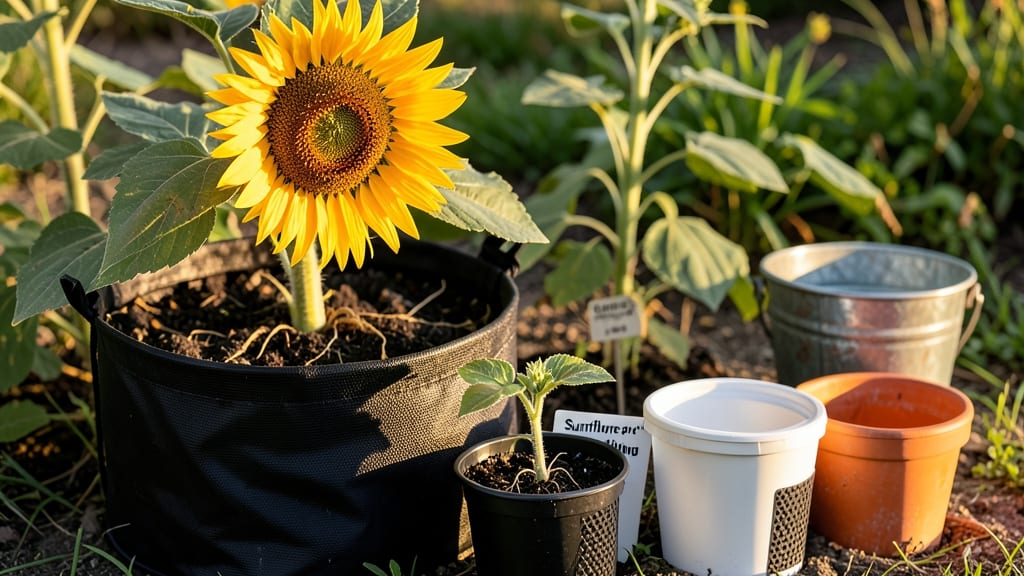
Sunflowers need pots at least 12 inches in diameter to grow strong and stable—skimp on space, and you’ll end up with leggy stems or stunted blooms.
Picture this: your 🌻 sunflowers leaning precariously over the pot edge, roots circling desperately for room. That’s not just a cosmetic issue—it’s a growth killer. The right pot size makes all the difference between a thriving plant and one that struggles to stand upright.
But here’s the catch: dwarf varieties might fit in smaller containers, while giant sunflowers need 20+ inches of diameter to support their weight. We’ll break down the exact pot sizes for each type, plus how to avoid the three biggest mistakes that sabotage container-grown sunflowers.
You’ll learn how to pick the right material (fabric vs. ceramic), when to fertilize for maximum height, and even how to squeeze sunflowers into tight spaces without sacrificing blooms. Let’s get growing!
Minimum pot size requirements for sunflowers by variety and height
Choosing the right pot size for your sunflowers isn’t just about aesthetics—it’s about giving their roots room to breathe and their stems stability. Sunflowers are heavy feeders, and cramped containers lead to stunted growth or even toppling.
The minimum pot diameter depends entirely on your sunflower’s mature height and variety, from dwarf types to towering giants.
For dwarf sunflowers (1-3 feet tall), a 12-inch diameter pot is the absolute minimum. These varieties, like 'Teddy Bear' or 'Moulin Rouge,' have shallower roots, but they still need 6-8 inches of soil depth to establish properly.
Anything smaller risks root binding, where roots circle the pot instead of growing outward.
Medium-height sunflowers (3-6 feet) demand 18-inch diameter pots—that’s roughly 2-3 gallons of soil volume. Varieties like 'Autumn Beauty' or 'ProCut' need this space to support their thicker stems and deeper root systems. Skimping here often results in weak stems that snap under their own weight.
Here’s where most gardeners go wrong: giant sunflowers (6-14 feet) require 24-inch diameter pots or larger. Think 'Mammoth Russian' or 'American Giant'—these need 5+ gallons of soil and 12+ inches of depth. Without it, you’ll see yellowing leaves from nutrient competition and poor flowering.
| Variety Type | Mature Height | Minimum Pot Diameter | Soil Depth Needed | Stability Notes |
|---|---|---|---|---|
| Dwarf | 1-3 ft | 12 inches | 6-8 inches | Lightweight stems; use saucers for wind |
| Medium | 3-6 ft | 18 inches | 8-10 inches | Thicker stems; stake if outdoors |
| Giant | 6-14 ft | 24+ inches | 12+ inches | Heavy roots; use 5-gallon+ pots |
Root depth matters just as much as diameter. Sunflowers develop taproots that can grow 3-4 feet deep in ideal conditions. In containers, this means your pot must have at least 12 inches of soil depth—even for dwarf varieties.
Shallow pots force roots to compete for nutrients near the surface, leading to nutrient deficiencies like yellowing leaves.
Pro tip: If you’re growing multiple sunflowers in one pot, space them 12 inches apart regardless of variety. Crowding accelerates competition for water and weakens stems. For example, two medium-height sunflowers need a 24-inch diameter pot with 18 inches of soil depth—not two 18-inch pots side by side.
Material matters too. Terracotta pots dry out faster but provide better breathability for roots, while plastic containers retain moisture longer but can overheat in full sun. For giant sunflowers, fabric grow bags are ideal—they mimic ground conditions and allow roots to expand naturally.
One mistake we see often is underestimating wind exposure. Even in pots, sunflowers need stability support. For heights over 4 feet, use bamboo stakes or cage supports inserted at planting. Place pots in sheltered spots or group them to reduce swaying.
For limited-space gardeners, consider dwarf or semi-dwarf varieties like 'Sunspot' or 'Little Becka.' These thrive in 5-gallon buckets and still produce vibrant blooms. Just remember: even small sunflowers need drainage holes to prevent root rot.
Final rule of thumb: When in doubt, go bigger. A 12-inch diameter pot is the absolute minimum for any sunflower, but 18-24 inches gives them the room to thrive.
Your sunflowers will reward you with healthier stems, larger blooms, and stronger seeds—all thanks to the right container size. 🌻
Critical factors that determine sunflower pot success (beyond size)
When growing sunflowers in containers, pot size gets all the attention—but it’s only part of the equation. Drainage holes and soil depth are just as critical for healthy roots and stable growth.
Without proper drainage, your sunflower’s roots will suffocate, leading to root rot and stunted growth. Similarly, shallow soil limits root expansion, causing your plant to topple over as it matures.
Even the best-quality pot material—whether ceramic, fabric, or plastic—can fail if these factors aren’t addressed. For example, a 12-inch diameter pot might seem adequate for dwarf varieties, but without proper drainage, it becomes a death trap. The right container setup ensures your sunflower thrives from seedling to full bloom.
⚠️ callout-warning
Skipping drainage holes is like planting in a swamp. Sunflowers need well-draining soil to prevent root rot. Even "self-watering" pots require holes—roots need oxygen, not soggy soil!
Fix it: Drill holes in the bottom of your pot if none exist. Use a gravel layer (1-2 inches) at the base to improve airflow.
Beyond drainage, soil depth is non-negotiable. Sunflower roots can grow 3-4 feet deep, but most standard pots only offer 6-12 inches. This mismatch forces roots to circle tightly, weakening the plant.
To compensate, choose deep containers (at least 12 inches deep) or opt for fabric grow bags, which allow roots to spread more naturally.
Another overlooked factor is pot material. Terracotta pots dry out faster but provide excellent breathability, while plastic retains moisture longer but risks overheating. For sunflowers, I recommend fabric containers—they balance drainage and moisture while allowing roots to expand.
Just ensure they’re sturdy enough to support your mature plant’s weight.
Common mistakes like overcrowding or using old potting mix can also sabotage your sunflowers. Always space seeds 6 inches apart and refresh soil with compost to prevent nutrient depletion.
Even with the right pot, poor soil quality will stunt growth. Think of your container setup as a mini ecosystem—every detail matters!
Pro tip: Add perlite or vermiculite to your potting mix for extra aeration. This helps roots breathe, especially in dense soils. With the right drainage, depth, and material, your sunflower will stand tall and proud—no toppling required! 🌻