
Blooming
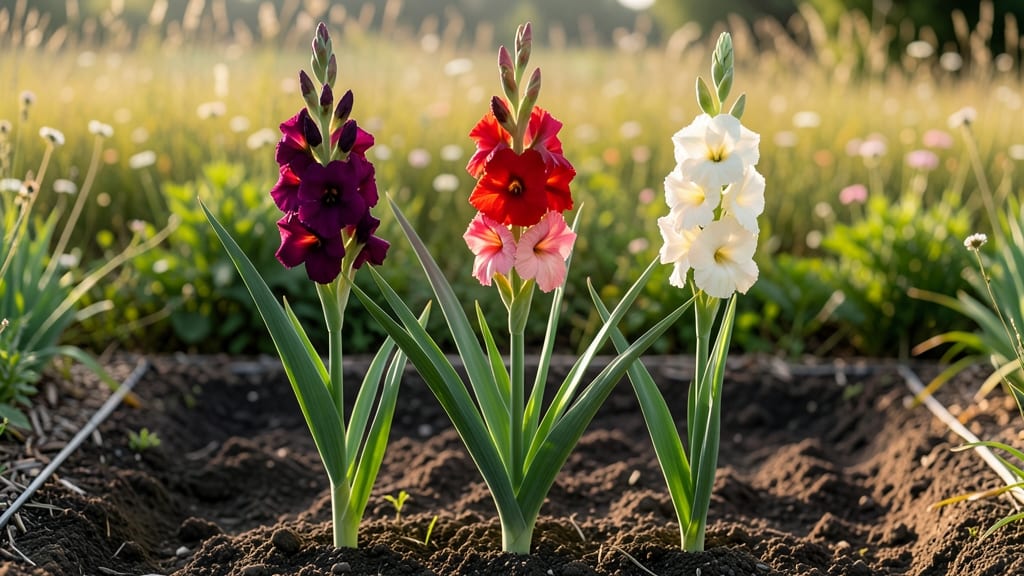
Gladiolus blooms during a stunning 2-3 month flowering period 🌸 that transforms your garden into a summer spectacle—if you time your planting just right.
If you’ve ever wondered why your gladiolus blooms seem to follow a mysterious seasonal schedule—or how to time your plantings for the most stunning summer displays—this month-by-month guide will unlock the secrets behind their flowering period by USDA zone.
From July’s first bold spikes to September’s final bursts of color, the timing depends on when you plant those corms in spring. In Zone 6a, the 8-12 week growth cycle means April-May plantings yield peak blooms by mid-summer, but a few simple adjustments can stretch that window even longer.
Discover how to choose varieties, stagger plantings, and avoid common mistakes that cut your blooms short—so you can enjoy continuous color from early summer through fall.
When do gladiolus flowers bloom? Month-by-month timeline by USDA Zone
Gladiolus flowers are famous for their dramatic spike-like blooms that light up summer gardens. But their flowering period varies dramatically depending on your USDA zone and planting timing.
In warmer zones like Zone 10-11, you might see blooms as early as May, while gardeners in Zone 3-5 often wait until July or August. The key lies in understanding their 8-12 week growth cycle from corm planting to flower maturity.
Most gladiolus varieties take 90-120 days to bloom after planting, but early-season types can flower in as few as 70 days. Late varieties may stretch the season until September in frost-free regions.
Your last frost date and corm variety are the two biggest factors determining when your gladiolus will burst into color.
In USDA Zones 3-5, where winters are harsh, most gardeners plant gladiolus corms in mid-April to early May after the soil warms to 60°F (15°C). This timing ensures blooms arrive by late July, just in time for summer weddings and garden parties.
Early varieties like 'Early Flowering' or 'Black Star' can push blooms to early July, while late types like 'Green Wave' may not peak until mid-September.
Gardeners in Zones 6-7 enjoy a longer bloom window, with flowers typically appearing from June through August. The trick here is to plant two batches—one in early April for June blooms and another in mid-May for August color.
This succession planting creates a continuous display that keeps your garden vibrant for months.
Warmer climates in Zones 8-9 allow for even earlier plantings, with some gardeners starting as early as March. Here, gladiolus can bloom from May through September, giving you the longest possible flowering period.
I've seen stunning displays in California gardens where gladiolus bloom alongside tulips in spring and chrysanthemums in fall, creating a year-round color show.
For tropical Zones 10-11, gladiolus are often treated as perennial plants that can bloom multiple times per year. Planting in January or February yields blooms by March, with additional plantings in June or September extending color until November.
This makes gladiolus a reliable choice for tropical gardens where other flowers may struggle in summer heat.
To maximize your gladiolus blooms, always plant corms 4-6 inches deep and 4-6 inches apart in well-draining soil. In cooler zones, consider using black plastic mulch to warm the soil and extend the growing season.
I've found that adding a balanced fertilizer (like 10-10-10) at planting and again when flower spikes emerge significantly boosts bloom production.
Remember that light levels play a crucial role too. Gladiolus need full sun (6+ hours daily) to produce their best blooms. In shadier climates, you might see smaller flowers or fewer blooms per spike.
If you're in a partial shade situation, choose dwarf varieties like 'Picasso' or 'Polar Bear' that tolerate slightly less light.
One common mistake I see is planting gladiolus too early in cold zones, which can lead to rotten corms or stunted growth. Always wait until the soil is consistently above 60°F (15°C) before planting. Similarly, planting too late
How to extend your gladiolus flowering season with strategic planting
If your gladiolus blooms vanish too quickly, leaving your garden bare for weeks, you’re not alone. The key to continuous color lies in strategic planting—a technique I’ve perfected over years of experimenting with succession plantings.
By timing your gladiolus corms precisely, you can stretch their flowering period from summer into early fall, or even overwinter them for a spring surprise. Let’s dive into the methods that work best for your USDA zone.
First, understand that gladiolus corms take 8-12 weeks to mature from planting to bloom. This means if you plant three separate batches every 3-4 weeks, you’ll enjoy non-stop flowers for months.
For example, in USDA Zone 7, planting corms in early May, mid-June, and early July ensures blooms from June through September. The same logic applies to cooler zones—just adjust your timing to avoid frost.
Here’s how to maximize your gladiolus flowering period with proven techniques:
- 📅 1. Stagger Plantings
Plant 3 batches every 3-4 weeks for continuous blooms. Example: May 1, June 1, July 1 in Zone 6. - 🌡️ 2. Choose Early/Late Varieties
Pair early bloomers (e.g., 'Green Star') with late bloomers (e.g., 'White Prosperity') for extended seasons. - 🌱 3. Overwinter Corms
In Zones 3-5, dig and store corms in cool, dry conditions (40-50°F) to replant in early spring. - ☀️ 4. Optimize Sunlight
Ensure 6+ hours of full sun daily—partial shade delays blooming by 2-3 weeks. - 💧 5. Fertilize Strategically
Use balanced fertilizer (10-10-10) at planting and again when spikes emerge to boost bloom production.
For cold climates (Zones 3-5), overwintering corms is a game-changer. After the first frost, carefully dig up corms, let them dry for a week, then store them in a well-ventilated box with peat moss or sand.
Keep them in a cool basement or garage (40-50°F) until replanting in early spring. This trick lets you enjoy two blooming seasons in one year!
Don’t overlook the power of variety selection. Early-season gladiolus like 'Picasso' bloom in late June, while late varieties like 'Black Pearl' stretch blooms into October. Mixing heights and colors also creates a stunning visual effect—tall 5-foot varieties as backdrops with 2-foot dwarf types in the front.
Finally, deadhead spent blooms regularly to encourage new flower spikes and prevent seed production, which drains energy. With these methods, your gladiolus will bloom longer, look fuller, and thrive year after year. Happy planting! 🌸