
Flowers
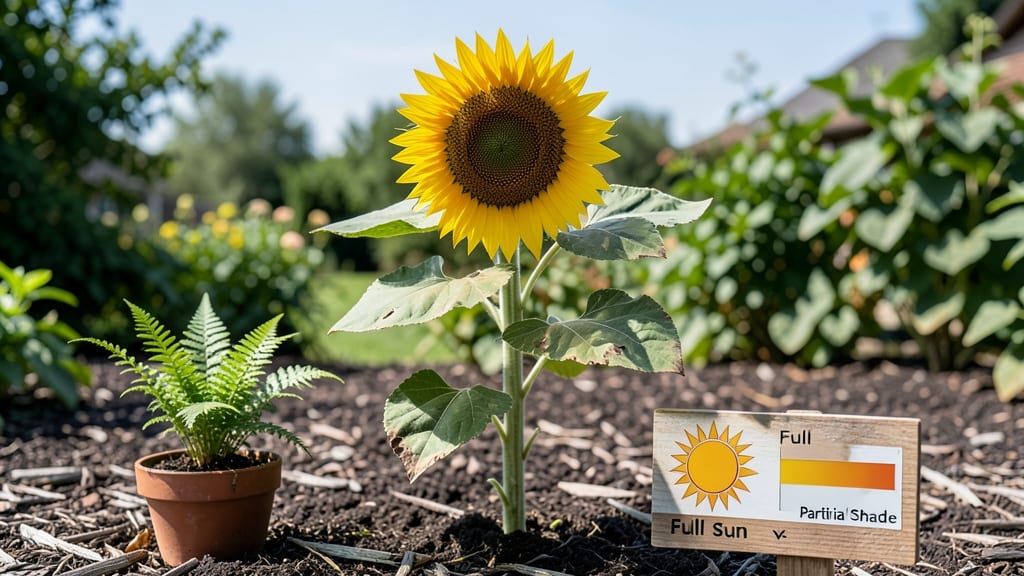
Do sunflowers need full sun? The short answer is yes—they thrive best with at least 6 to 8 hours of direct light daily to reach their towering potential 🌻.
But here’s the catch: what happens when your garden spot isn’t basking in sunlight all day? You might still get sunflowers—but they’ll be leggy, sparse, and far less impressive than their sun-soaked cousins.
Below, I’ll break down exactly how much light sunflowers really need, how to spot light deprivation, and the surprising tricks (like reflective mulch or companion planting) to stretch those golden rays when space is tight.
Whether you’re working with a shady corner or just curious about pushing the limits, you’ll learn how to coax the biggest, brightest blooms—even in less-than-ideal light.

How much sun do sunflowers really need: the science behind light requirements
Sunflowers are famous for their towering sun-loving nature, but how much sunlight do they actually need to thrive? The answer lies in photosynthesis—the process where chlorophyll converts light into energy.
For sunflowers, 6-8 hours of direct sunlight per day is the sweet spot, but they can tolerate partial shade with some trade-offs. Let’s break down the science behind their light requirements and how it impacts your garden’s golden giants.
Sunflowers belong to the Helianthus annuus family, which evolved to maximize light absorption. Their large, broad leaves are designed to capture sunlight efficiently, fueling rapid growth and massive flower production. When deprived of adequate light, their stalk height shrinks, and bloom size suffers.
This isn’t just guesswork—studies show that sunflowers grown with less than 4 hours of sun may never even flower, while those with 8+ hours produce the largest, most vibrant blooms.
Here’s the hard science: Sunflowers need at least 6 hours of full sun to trigger the floral initiation process, where the plant shifts energy from leaf growth to flower development. Without this light threshold, their growth hormones (like gibberellins) remain suppressed, leading to leggy, weak stalks and delayed blooming.
Think of sunlight as their fuel source—the more they get, the taller and more robust they become.
| Sunlight Requirement | Optimal Growth Impact | Chlorophyll Production | Stalk Height | Bloom Size |
|---|---|---|---|---|
| 6-8 hours (Full Sun) | Maximized photosynthesis, vigorous growth | High (deep green leaves) | 10-16 ft | 12-24 inches |
| 4-6 hours (Partial Sun) | Slower growth, reduced flowering | Moderate (lighter green) | 4-8 ft | 6-12 inches |
| Less than 4 hours (Shade) | Leggy stems, minimal blooms | Low (yellowing leaves) | 2-4 ft | 2-6 inches (or none) |
The chlorophyll in sunflower leaves acts like a solar panel, absorbing blue and red light wavelengths to power growth. When sunlight is limited, chlorophyll production drops, leading to pale, yellowing leaves and stunted development.
This is why sunflowers in partial shade often develop longer, thinner stems—they’re stretching toward any available light, a phenomenon called etiolation. In extreme cases, they may never produce flowers at all.
If you’re growing sunflowers in partial shade, choose dwarf varieties like 'Teddy Bear' or 'Moulin Rouge,' which tolerate 4-6 hours of sun better than their towering cousins. Even then, their flower heads will be smaller, and stalks may not reach their full potential.
For the showstopping sunflowers you see in fields and gardens, full sun is non-negotiable. Aim for a south-facing spot where they can soak up morning sunlight and afternoon rays without obstruction.
Seasonal adjustments matter too. In summer’s intense heat, sunflowers can handle direct midday sun if kept well-watered, but in spring or fall, they may need morning sun and afternoon shade to avoid stress.
Pay attention to your local microclimate—a sunny urban garden might get more reflected light than a wooded backyard, altering their needs.
Pro tip: Use a light meter or observe your sunflowers’ shadows to gauge their light exposure. If shadows are longer than 4 feet at midday, they’re likely getting less than 6 hours of sun.
To compensate, try reflective mulches (like white gravel) or mirror panels to bounce extra light onto their leaves. Even small tweaks can make a big difference in their growth trajectory.
Remember, sunflowers aren’t just sun-worshippers—they’re energy converters. The more sunlight they absorb, the more glucose they produce, which translates to taller stalks, larger blooms, and even bigger seeds.
So if you’re dreaming of 12-foot giants with 20-inch flowers, give them the full sun treatment they crave. Your garden—and your sunflowers—will thank you.
🌻
Signs your sunflowers aren’t getting enough sun (and how to fix it)
Sunflowers stretch toward the sun like eager children reaching for candy, but when they don’t get enough light, their growth tells a different story. Leggy stems, pale yellow leaves, and tiny blooms are all red flags that your sunflowers are light-deprived.
These signs aren’t just cosmetic—they signal your plants are struggling to produce energy through photosynthesis, which directly impacts their height, flower size, and even seed production.
If your sunflowers are growing taller but weaker, with stems reaching unusually thin and leaves growing far apart, they’re likely stretching toward any available light source.
This is nature’s way of compensating for a lack of sunlight, but it weakens the plant’s structure and reduces its ability to support those showstopping blooms you planted for. Even worse, delayed or absent flowering means fewer seeds for next year’s garden.
⚠️ callout-warning ⚠️
🌱 Warning: Sunflowers in Shade Will Never Reach Their Full Potential
Sunflowers require 6-8+ hours of direct sunlight daily. Without it, they’ll:
- ✖️ Grow leggy and weak (stems may flop)
- ✖️ Produce smaller, fewer blooms (or none at all)
- ✖️ Develop pale, sparse foliage (chlorosis)
- ✖️ Yield low-quality seeds (if they flower)
💡 Quick Fix: Move plants to south-facing beds or use reflective mulch (white gravel or aluminum foil) to bounce extra light onto stems.
First, assess your garden’s sun exposure patterns. Most sunflowers thrive in full sun locations, which means at least 6-8 hours of direct sunlight during their growing season (typically May through September). If your current spot only gets 4 hours or less, it’s time to relocate.
Look for areas where sunlight hits for the longest duration, like near south- or west-facing walls or fences that reflect light.
For gardeners with limited sunny space, reflective surfaces can work wonders. Try using white gravel mulch, aluminum foil, or even mirrors placed strategically around your sunflowers to redirect light onto their leaves. This trick can add 1-2 extra hours of effective light exposure, helping your plants grow stronger.
Another clever tactic is companion planting with shorter, sun-loving plants like marigolds or zinnias around the base of your sunflowers—their foliage won’t block light but can create a microclimate that boosts overall growth.
If relocating isn’t an option, consider dwarf sunflower varieties like ‘Teddy Bear’ or ‘Moulin Rouge,’ which tolerate partial shade better than their towering cousins. These varieties still need at least 4-6 hours of sun daily, but they’ll perform better in mixed-light conditions than standard sunflowers.
Pair them with light-colored mulch to maximize reflection, and avoid overcrowding—sunflowers need 12-24 inches of space to access sunlight without competing with neighbors.
Finally, don’t forget to rotate your sunflowers annually. Plants left in the same spot year after year can deplete soil nutrients and compete with their own shade as they grow taller. By moving them to a sunnier location each season, you’ll give them the best chance to thrive.
With these adjustments, your sunflowers will soon be reaching for the sky with strong, sturdy stalks and vibrant blooms instead of stretching weakly toward the nearest light source.