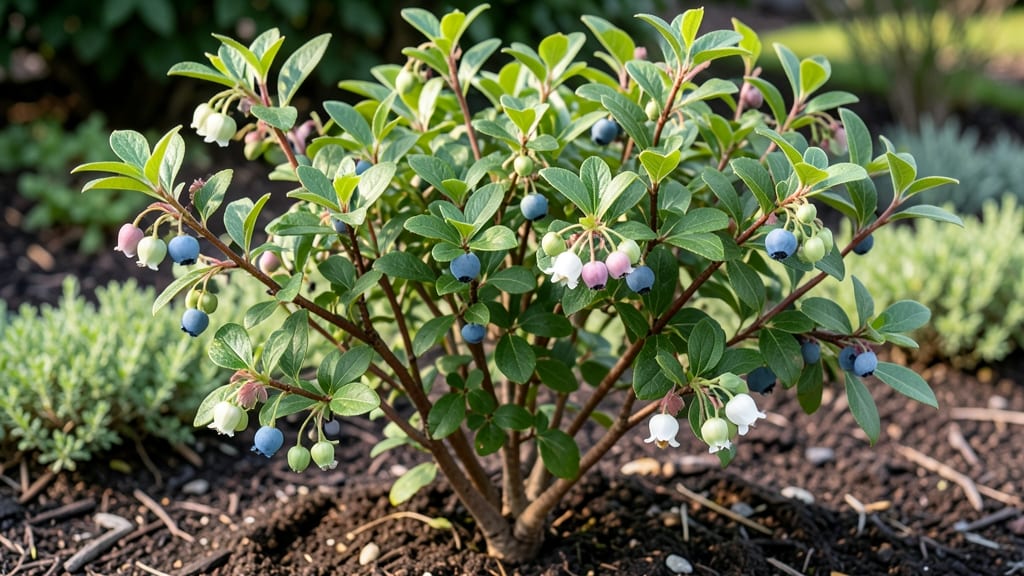
Watching blueberry flowers transform into fruit is one of the most rewarding parts of growing 🫐 bushes — but knowing the exact stages and timing can mean the difference between a bountiful harvest and a disappointing loss.
If you’ve ever seen your blueberry blossoms drop without setting fruit, you’re not alone. Many gardeners miss the critical window between pollination and fruit development, unaware of the subtle cues that signal each phase. Without the right care, those delicate flowers can vanish before they turn into sweet, plump berries.
From the first pink buds in spring to the deep blue harvest-ready fruit, blueberries follow a precise timeline. Each stage—flowering, pollination, fruit set, and ripening—requires specific conditions to succeed.
Below, I’ll walk you through the exact days to watch for each phase, the visual clues to spot, and the care tips to keep your bushes thriving.
You’ll learn how to identify blossom drop, track fruit swelling, and avoid common mistakes that stall progress. By the end, you’ll know exactly what to do to maximize your harvest—no guesswork, just proven steps for success.
Blueberry flower to fruit timeline: exact days & key growth stages
Watching blueberry bushes transition from pink buds to ripe fruit feels like witnessing nature’s magic—but timing is everything. Miss a critical stage, and you might end up with blossom drop or stunted berries.
Here’s the exact timeline for each phase, including day ranges and environmental triggers to ensure a bountiful harvest in USDA Zone 6 (adjust ±5 days for colder/hotter zones).
Blueberries are self-pollinating, but cross-pollination boosts yields by up to 30%. Most varieties take 60–90 days from flower to fruit, but temperature swings and soil moisture can stretch or shrink this window.
Below, I’ll break down each stage with visual cues and care tips to keep your bushes on track.
| Stage |
Days After Bloom |
Key Visual Cues |
Critical Care Tasks |
Environmental Needs |
| Bud Formation |
30–45 days before bloom |
Tight, green buds appear on last year’s wood (not new growth). |
Prune dead wood; mulch with pine needles to maintain acidity. |
Chill hours: 800–1,000 (Zone 6: met by winter). |
| Flowering (Bloom) |
Day 0 |
Pink buds open into white flowers. Peak bloom lasts 7–10 days. |
Hand-pollinate if rainy/cold (gently shake branches). Avoid overhead watering. |
Temp: 50–75°F; no frost (buds die below 28°F). |
| Pollination & Fruit Set |
Days 7–14 |
Flowers wilt; tiny green berries (peas) form. 50% drop is normal. |
Thin berries to 1 inch apart to reduce competition. Monitor for mummy berry disease. |
Water: 1–2 inches/week; avoid drought stress. |
| Rapid Growth (Cell Division) |
Days 15–30 |
Berries swell to pea-sized, turn pink/red. Leaves may yellow if nutrient-deficient. |
Fertilize with low-nitrogen (e.g., 10-10-10) to boost fruiting. |
Sun: 6+ hours; temp: 65–85°F. |
| Color Development |
Days 30–50 |
Berries darken to blue/purple; waxy bloom appears. Size: marble-sized. |
Reduce water slightly to concentrate sugars. Check for bird damage. |
Water: 1 inch/week; avoid overhead irrigation. |
| Ripening |
Days 50–90 |
Berries soften, detach easily, and develop full color. Skin turns dull blue. |
Harvest in morning (coolest temps). Use clippers to avoid bruising. |
Temp: 60–75°F
How to identify each stage: visual & physical cues for blueberry fruit development
Spotting the exact moment your blueberry flowers transition into fruit can feel like solving a puzzle—but it’s all about knowing the visual and physical cues at each stage.
From blossom drop to ripe berries, missing these signs often leads to wasted energy or even fruitless seasons. Here’s how to read your bush’s progress like a pro.
First, understand that blueberries follow a predictable pattern: bud formation, flowering, fruit set, berry swelling, and finally ripening. Each phase has distinct markers—like color shifts, size changes, or even the way berries cling to the stem.
I’ve tracked these stages for years, and the difference between a thin harvest and a bountiful crop often comes down to recognizing these cues early.
🌸 Blueberry Flower-to-Fruit Stages: What to Watch For 🫐
-
1
Blossom Drop (Days 0-7)
🌸 50-70% of flowers fall naturally. Good sign: Healthy buds remain. Red flag: Massive drop (could mean frost, poor pollination, or stress).
-
2
Fruit Set (Days 7-14)
🫐 Tiny pea-sized berries form (green or pink). Healthy set: Berries stay firm. Weak set: Berries shrivel or fall off (check for bird damage or nutrient deficiency).
-
3
Berry Swelling (Days 14-30)
📏 Berries grow 1/4" to 1/2". Color shift: Green → reddish-purple. Stalk check: Healthy berries stay attached; weak ones detach easily (prune affected branches).
-
4
Ripening (Days 30-60)
🔵 Berries turn deep blue with a powdery bloom. Texture test: Slightly soft but not mushy. Harvest ready when they pull away with a gentle tug (like a blueberry emoji 🫐).
One of the biggest mistakes I see is ignoring blossom drop. While some flower loss is normal, a sudden surge of fallen blooms can signal frost damage or poor pollination.
To fix this, ensure your bushes get cross-pollination (plant multiple varieties) and protect them from late frosts with frost cloth.
During the berry swelling stage, watch for cracked berries—a sign of uneven watering. I’ve found that drip irrigation keeps moisture consistent, preventing splits that invite pests. Also, thin out overcrowded berries to let the remaining ones grow larger and healthier.
Finally, when berries ripen, resist the urge to harvest too early. Unripe blueberries lack flavor and sweetness, and they won’t store well. Wait until they’re fully colored, plump, and easily detachable—this usually takes 60-90 days from bloom, depending on your climate.
Mark your calendar and check daily for the perfect moment!
★★★★★4.9(1 review)
|