
Flowers
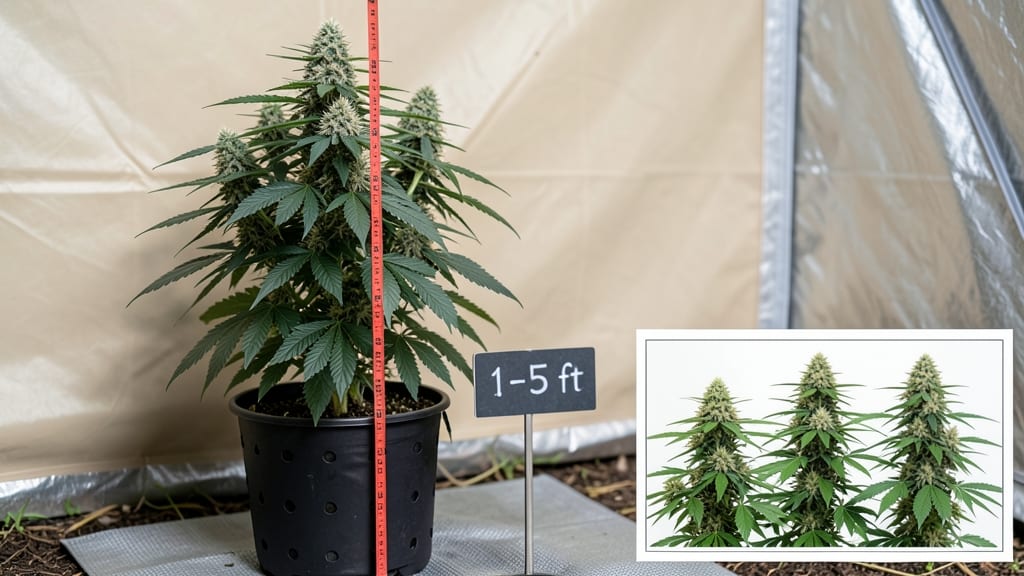
Autoflowers grow between 2 and 8 feet tall, depending on genetics and growing conditions—so if you're planning your first grow, knowing these exact ranges can help you avoid overcrowding or wasted space.
Picture this: a 1-foot-tall autoflower tucked into a corner next to a 7-foot giant strain. That’s the kind of height variation you’ll see, and it’s why size matters more than you’d think. Without the right setup, you could end up with plants fighting for light or struggling to mature properly.
Most autoflower varieties fall into three height categories: dwarf (2–3 ft), medium (4–5 ft), and tall (5–8 ft). The difference isn’t just about aesthetics—it affects yield, pruning needs, and even how much space you’ll need indoors or outdoors.
In this guide, I’ll break down the height ranges by strain type, share tips for managing growth without sacrificing yield, and highlight the best compact varieties for small-space grows. Let’s get started.

Autoflower height ranges by strain type: from dwarf to giant varieties
Autoflowering cannabis plants are famous for their predictable growth cycles, but their final heights can surprise even experienced growers. Unlike photoperiod strains, autoflowers don’t rely on light cycles—they automatically flower based on genetics.
This means their height potential is determined almost entirely by their strain type: Indica, Sativa, or Hybrid. Understanding these ranges helps you plan space, lighting, and even training techniques before planting.
Most growers assume all autoflowers stay short, but the truth is far more varied. Dwarf varieties like Auto Blueberry max out at just 2-3 feet, while tall Sativa-dominant strains such as Auto Amnesia can stretch to 7-8 feet or taller.
Genetics play the biggest role—Indicas tend to stay compact, while Sativas grow taller and leaner. Even within the same strain type, individual plants can vary by 1-2 feet depending on growing conditions.
Here’s the key: height isn’t just about strain type—it’s also influenced by nutrients, light intensity, and pruning practices. For example, a Northern Lights Auto (typically 3-4 feet) might grow 1 foot taller if overfed with nitrogen.
Conversely, low-stress training (LST) can keep a 7-foot Sativa under control while boosting yield. Let’s break down the exact height ranges by strain type so you can plan your grow space like a pro.
🌱
| Strain Type | Height Range (Feet) | Example Varieties | Genetic Influence |
|---|---|---|---|
| Indica-Dominant | 2–4 ft | Auto Blueberry, Auto Northern Lights, Auto Granddaddy Purple | Short, bushy genetics; compact growth habit |
| Hybrid (Balanced) | 3–5 ft | Auto Critical Mass, Auto Gelato, Auto Frisian Dew | Moderate height; mix of Indica/Sativa traits |
| Sativa-Dominant | 5–8+ ft | Auto Amnesia, Auto Jack Herer, Auto Durban Poison | Tall, airy structure; prone to stretching |
| Dwarf/Compact | 1–2.5 ft | Auto Purple Kush, Auto Blue Dream, Auto Lemon Haze (dwarf) | Bred for small-space grows; dense buds |
| Giant/Outdoor | 6–10+ ft | Auto White Widow, Auto Super Silver Haze, Auto Ghost Train Haze | High-THC Sativa genetics; needs strong support |
Note: Heights can vary by 1-2 feet based on growing conditions.
If you’re growing Indica-dominant autoflowers, you’re in luck—they rarely exceed 4 feet, making them perfect for small tents or closet grows. Varieties like Auto Blueberry or Auto Northern Lights stay stubby and bushy, producing dense buds even in tight spaces.
These strains are also great for beginner growers because they’re forgiving and less prone to light burn from stretching.
On the other hand, Sativa-dominant autoflowers are the skyscrapers of the cannabis world. Strains like Auto Amnesia or Auto Durban Poison can easily hit 7-8 feet outdoors, requiring strong trellises or screen-of-green (SCROG) training to manage height.
Without proper support, these plants can flop over under bud weight, leading to broken branches or mold risks in dense foliage.
Hybrids offer a middle-ground solution, typically landing between 3-5 feet. These strains—like Auto Gelato or Auto Frisian Dew—balance Indica relaxation with Sativa energy, making them versatile for both indoor tents and outdoor gardens.
The key with hybrids is monitoring growth trends early: if a plant starts stretching too fast, low-stress training (LST) can keep it under control while maximizing yield.
🌿
One common mistake growers make is assuming all autoflowers stay short. While it
How to control autoflower height without sacrificing yield (pruning & training guide)
Autoflowering plants grow fast but can quickly outgrow your space if left unchecked. The key to managing height without losing yield lies in strategic pruning and training techniques like topping and low-stress training (LST). These methods redirect energy to bud production while keeping plants within your desired height limits.
Before reaching for your pruners, understand that autoflowers have a fixed lifespan—typically 8-12 weeks. Their rapid growth means timing is everything. Prune too early, and you risk stunting development; wait too long, and you’ll struggle to control unruly branches.
Let’s explore proven techniques to keep your plants compact yet productive.
Cut the main stem 2-3 nodes above a healthy set of leaves when plants reach 12-18 inches. This forces two new colas to grow, creating a bushier structure.
Gently bend and tie down branches to horizontal positions using soft plant ties. This spreads canopy width while keeping height under 4-5 feet.
Remove lower leaves to improve airflow and light exposure. Focus on yellowing or large fan leaves—never strip more than 20% of foliage at once.
Squeeze stems gently but firmly between your thumb and forefinger until they crack but don’t break. This thickens stems, supporting heavier buds and reducing flopping.
For indoor grows, combine LST with screen-of-green (ScrOG) techniques. Place a netting or trellis 2-3 feet above your plants and weave branches through it. This creates a uniform canopy, maximizing light exposure and yield per square foot.
Outdoor growers should prioritize natural light management. If your autoflowers are reaching 6 feet or taller, consider pruning lateral branches to redirect energy to the main colas. Always use sterilized pruners to prevent disease spread.
Remember: Less is more with autoflowers. Over-pruning can stress plants and reduce yield. Start conservatively, monitor growth weekly, and adjust techniques based on your plants’ response. With practice, you’ll master the balance between height control and maximum potency.