
Watering
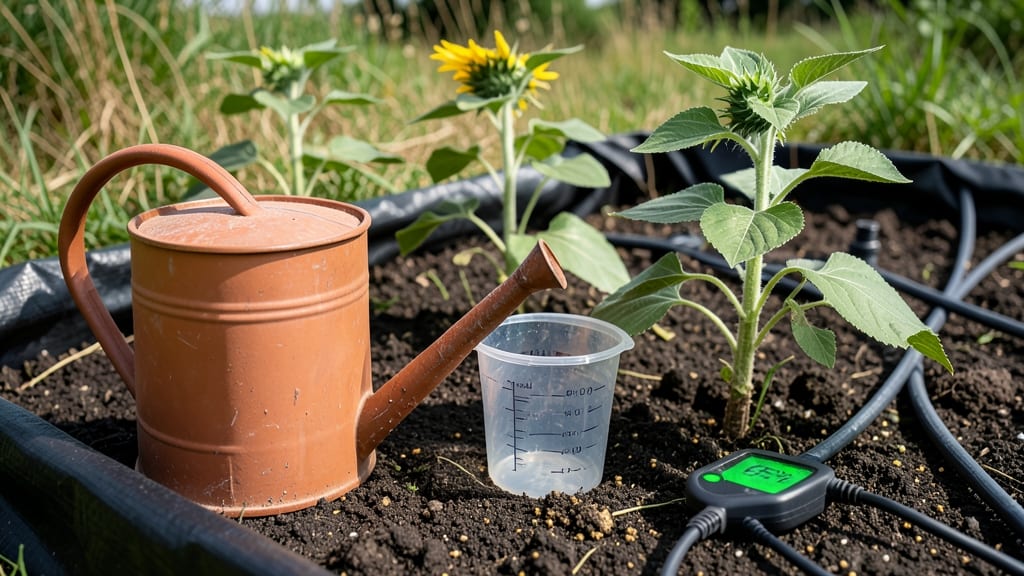
Watering sunflower seedlings the right way—how often to water sunflower seedlings—keeps them thriving from tiny sprouts to towering giants 🌻 — but get it wrong, and you’ll end up with weak stems or drowned roots.
Picture this: your seedlings are wilting by noon, or worse, their soil is soggy and gray, not the rich, dark brown it should be. That’s the tightrope of watering sunflowers—too much or too little, and you’re fighting for their survival instead of watching them grow.
Here’s the secret: a simple finger-dip test tells you exactly when to water, saving you from guesswork. Whether you’re a first-time gardener or a seasoned pro, this method ensures your sunflowers get the perfect moisture balance every time.
Below, I’ll break down the exact schedule for seedlings, the signs of over- or under-watering, and how to adjust for your climate so your sunflowers reach their full height without a struggle.
The finger-dip test: how to check sunflower seedling soil moisture
Sunflower seedlings are delicate in their early stages, and soil moisture plays a critical role in their survival. Too much water can suffocate roots, while too little can stunt growth.
The finger-dip test is my go-to method for checking moisture levels—it’s simple, accurate, and works for seedlings aged 1 to 4 weeks. Unlike guesswork, this method gives you real-time feedback on whether your sunflowers need hydration.
Before you begin, gather a small notebook to track your observations. Note the seedling age, weather conditions, and how deep you’re checking the soil. For example, a 1-week-old seedling requires more frequent moisture checks than a 4-week-old one.
The finger-dip test helps you adjust your watering schedule based on real soil conditions, not just a calendar.
Here’s how to perform the test correctly: insert your finger into the soil about 1 to 2 inches deep. This depth mirrors where the majority of a sunflower seedling’s roots are actively growing.
Press gently—you’re not digging for treasure, just assessing moisture. Pay attention to the texture and resistance of the soil. If it feels damp but not soggy, your seedlings are in the ideal range.
Step-by-Step Finger-Dip Test for Sunflower Seedlings
- Step 1: Choose a shady, calm spot near your seedlings to avoid disturbing them.
- Step 2: Insert your index finger 1-2 inches deep into the soil beside a seedling.
- Step 3: Check for dampness but no moisture. Soil should feel like a wrung-out sponge.
- Step 4: For 1-2 week old seedlings, water if soil feels dry at the tips of your finger.
- Step 5: For 3-4 week old seedlings, wait until soil feels dry halfway down your finger.
- Step 6: Water deeply in the morning to encourage root growth and prevent fungal issues.
During the germination stage (first 7-10 days), sunflower seeds need consistently moist soil to sprout. Use the finger-dip test to ensure the top ½ inch of soil stays damp but not waterlogged. If your finger comes out clean, it’s time to water.
Overwatering at this stage can lead to rot or mold, so aim for a balance—think of a slightly damp paper towel rather than a soggy sponge.
As your seedlings grow into the 2-4 week stage, their roots deepen, and they become more tolerant of slightly drier conditions. At this point, the finger-dip test becomes even more valuable.
Check the soil 1-2 inches deep—if it feels dry, give your seedlings a thorough watering. This encourages them to develop stronger root systems, preparing them for transplanting or long-term growth.
Pay close attention to the texture of the soil during your checks. Sandy soil drains quickly and may need more frequent watering, while clay soil holds moisture longer.
If you’re growing sunflowers in containers or raised beds, these environments dry out faster, so you’ll need to water more often than in-ground plantings. Always adjust your watering schedule based on what the finger-dip test reveals.
One common mistake is relying on a watering schedule rather than the soil’s actual condition. For instance, you might think, “I watered yesterday, so today’s fine,” only to find your seedlings wilting because of unexpected heat.
The finger-dip test eliminates guesswork. It’s your direct line to the health of your sunflower seedlings, telling you exactly when they need hydration.
If you notice yellowing leaves or wilting despite moist soil, it could signal an issue like overwatering or poor drainage. In this case, hold off on watering and check for signs of root rot.
Healthy sunflower seedlings should have deep green leaves and firm stems. The finger-dip test helps you catch problems early, giving your seedlings the best chance to thrive.
Pro tip: Keep a watering journal to track your finger-dip test results. Note the date, seedling age, weather conditions, and how often you watered. Over time, you’ll develop a keen sense of what “ideal moisture” feels like for your specific growing conditions.
This knowledge will make future seasons of sunflower growing even easier and more successful.
With the finger-dip test, you’ll master the art of watering sunflower seedlings like a pro. It’s a hands-on, low-tech solution that ensures your young plants get just the right amount of moisture—neither too much nor too little. Happy gardening, and may your sunflowers reach for the sky! 🌻
Sunflower watering schedule by seedling stage: days and depths
Sunflower seedlings thrive on consistency, but their watering needs shift dramatically from germination to early growth. In the first 1-2 weeks, keep soil evenly moist—like a wrung-out sponge—to encourage root development. After 3 weeks, gradually reduce frequency while increasing water depth to 1-2 inches per session.
Climate plays a huge role: arid zones need daily checks, while humid areas may only require watering every 3-4 days.
Container-grown seedlings dry out faster than in-ground plants, so monitor them daily. Use your finger to test moisture: if the top 1 inch feels dry, it's time to water. For in-ground seedlings, aim for deep but infrequent watering to encourage strong root systems.
Adjust your schedule based on rainfall—skip watering if 1/2 inch of rain falls in 24 hours.
| Seedling Stage | Watering Frequency | Depth (inches) | Arid Climate | Temperate | Humid |
|---|---|---|---|---|---|
| Germination (0-7 days) | Daily (keep moist) | 0.5-1 inch | Every 12 hours | Daily morning | Every 2 days |
| Seedling (1-2 weeks) | Every 2-3 days | 1 inch | Every 1-2 days | Every 2-3 days | Every 3-4 days |
| Early Growth (3-4 weeks) | Every 3-4 days | 1.5-2 inches | Every 2-3 days | Every 3-5 days | Every 5-7 days |
| Container vs In-Ground | Daily (containers) | 1-1.5 inches | Every 1-2 days | Every 2-4 days | Every 4-6 days |
Morning watering is critical—it reduces fungal risks and ensures roots absorb moisture before the heat of the day. Aim to water before 10 AM to give seedlings time to dry slightly.
If you notice yellowing leaves or wilting by noon, increase frequency by 1-2 days. Mulch around seedlings with straw or grass clippings to retain moisture and regulate soil temperature.
Adjust your schedule when temperatures rise above 85°F (29°C). In these conditions, water every 1-2 days regardless of climate, and always check soil moisture before watering. For container-grown seedlings, use self-watering pots or place them in trays filled with water to maintain consistent moisture.
Remember, sunflowers are resilient—underwatering is more harmful than occasional overwatering.
Watch for signs of stress: drooping leaves indicate thirst, while mushy stems signal overwatering. If you're unsure, perform the finger-dip test again. Once seedlings reach 6 inches tall, reduce watering to every 5-7 days, allowing roots to grow deeper.
This transition helps prevent top-heavy stems that can snap in wind or storms.
Your sunflower seedlings will reward consistent care with bold stems and vibrant blooms. Stick to this schedule, and you'll avoid the most common pitfalls—damping off from soggy soil or stunted growth from inconsistent watering. With patience and precision, your seedlings will soon reach for the sun.