How To
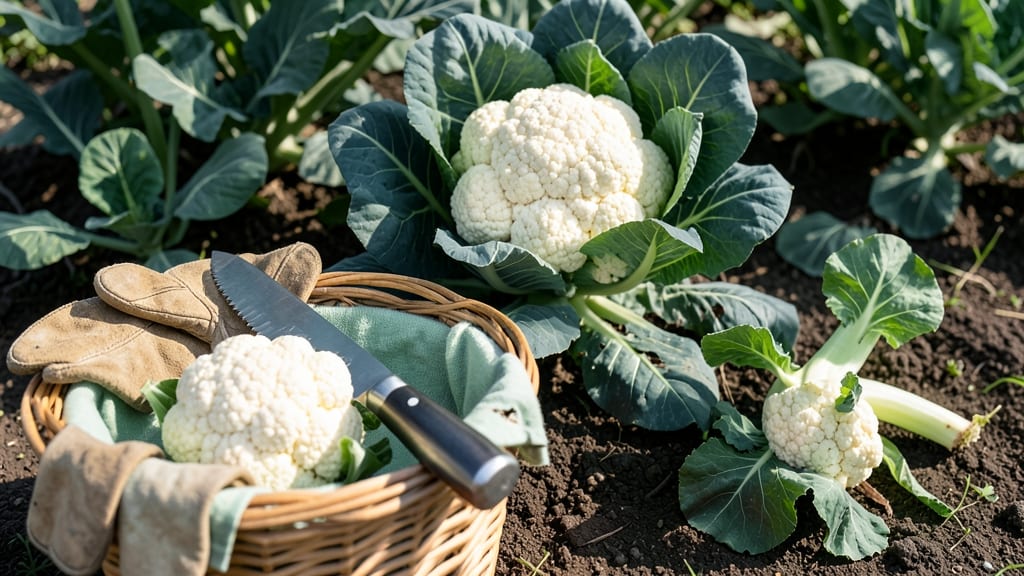
To know when to pick cauliflower 🥬, watch for a head that’s 6-8 inches wide, tightly packed, and a creamy color—never let it bolt or turn yellow.
Harvesting too early gives you underdeveloped florets, while waiting too long means tough, bitter curds. The perfect moment is when the head feels firm, the outer leaves yellow slightly, and the buds stay hidden—like a well-kept secret.
Climate plays a role too: in Zone 6a, avoid picking before June, or risk frost damage. Check the underside for tightness—if you can see gaps, it’s past its prime. Timing varies by variety, but these visual cues are your best guide.
Below, I’ll break down the exact signs to look for, how sunlight affects maturity, and why even a day too late can ruin your harvest. No more guesswork—just flavorful, restaurant-worthy cauliflower every time.
Cauliflower curd size & color: the exact visual clues for perfect harvest timing
Harvesting cauliflower at the perfect moment transforms your garden into a bounty of snow-white, tender florets instead of tough, bitter heads. The key lies in mastering two critical visual cues: head size and color progression.
When these elements align, you’ve hit the sweet spot between underdeveloped and overmature. I’ve grown dozens of varieties, and I can tell you—getting this right isn’t just about luck; it’s about understanding your plant’s language.
Most cauliflower varieties reach their prime when the head measures between 6 to 8 inches in diameter. This might sound like a narrow window, but trust me, those extra 2 inches make all the difference.
A head smaller than 6 inches often means it’s still maturing, while anything larger risks becoming woody or splitting. Think of it like baking a cake—timing is everything for that perfect texture.
The color transformation is equally telling. Young cauliflower heads start green, but as they mature, they gradually shift to their signature hue—whether that’s creamy white, purple, or orange, depending on the variety. For standard white cauliflower, look for a uniform, pale color without any lingering green.
This change happens fastest in full sun conditions, so if your plants are shaded, they’ll take longer to develop that telltale color.
Here’s a visual guide to help you spot the perfect moment—because even experienced gardeners sometimes miss the subtle signs:
Sunlight plays a sneaky role in this process. Cauliflower heads exposed to 6-8 hours of direct sun daily will mature faster and develop their final color more intensely. I once grew a batch in partial shade, and while the heads were edible, they lacked that crisp, snowy perfection.
If you’re in a cooler climate, like USDA Zone 6a, your plants might need a little extra time—keep an eye on frost dates, as temperatures below 25°F can ruin your harvest.
One pro tip I swear by? Check the underside of the head. A ready-to-harvest cauliflower will have a tight, compact structure with no visible buds peeking through. If you see tiny florets starting to open, you’ve missed your window.
This is your final quality check before making the cut. I’ve learned this the hard way—once, I waited too long, and my beautiful white heads turned into a sad, yellowing mess.
Don’t overlook the leaf condition either. As the head matures, the surrounding leaves will begin to yellow and die back naturally. This isn’t a sign of disease—it’s your plant’s way of redirecting energy to the head.
If the leaves are still vibrant and green, your cauliflower needs more time. But if they’re completely brown and crispy, you’ve waited too long.
Variety matters too. Purple or orange cauliflower might look ready when they’re still slightly green—these colors take longer to fully develop. For example, my ‘Graffiti’ purple cauliflower always needs an extra week compared to ‘Snowball Y Improved.’
Always check the seed packet for specific maturity times, but never rely solely on those numbers—visual cues are your best friend.
Finally, remember that consistent moisture keeps your heads from splitting or becoming bitter. During the final weeks before harvest, water deeply every 2-3 days to maintain that perfect texture. I’ve seen split heads ruin what would have been a stellar harvest—don’t let that happen to you!
When you combine these visual clues—size, color, leaf condition, and sunlight exposure—you’ll harvest cauliflower at its peak. Trust your eyes, and soon you’ll be serving up garden-fresh florets that put store-bought to shame. Happy harvesting! 🌱
5 Common mistakes that cause early or late harvesting (and how to avoid them)
Even the most attentive gardeners can end up with cauliflower heads that are either too small and underdeveloped or overripe and bitter. These mistakes happen more often than you’d think, but spotting them early can save your harvest.
The key is understanding the subtle visual cues your plants give you before it’s too late.
One of the biggest red flags is yellowing leaves around the head—this often means your cauliflower is either stressed by heat or ready to bolt. Another common sign is a loose, spreading head with visible buds, which indicates it’s past its prime.
Let’s break down these mistakes and how to fix them before your crop goes to waste.
⚠️ How to Know When to Pick Cauliflower
Check these 3 signs before harvesting:
- Head size: 6-8 inches in diameter (no larger!)
- Color: Fully developed and consistent (white, purple, or orange)
- Tightness: No visible buds—feels firm like a closed fist
Wait too long, and you’ll end up with bitter, woody florets instead of tender perfection.
Mistake #1: Ignoring temperature stress is a silent killer of cauliflower harvests. These cool-weather crops bolt (flower prematurely) when exposed to sudden heat waves or drought conditions. If your plants start sending up tall flower stalks, it’s too late—the head will never form properly.
To prevent this, use shade cloth during extreme heat and keep soil consistently moist.
Mistake #2: Overlooking leaf color changes can lead to missed harvest windows. Healthy leaves should be dark green and vibrant until the head is ready. When the outer leaves turn yellow or brown, it’s a signal that the head is maturing.
However, if the inner leaves also yellow, your plant may be nutrient-deficient or struggling with disease. Test your soil and adjust with compost or a balanced fertilizer.
Mistake #3: Harvesting at the wrong time of day might seem minor, but it affects freshness. Always pick cauliflower in the morning after dew has dried—this ensures the heads are crisp and hydrated.
Harvesting in the evening or after rain can lead to split heads or mushy florets, which ruin the texture. Pro tip: Use a sharp knife and cut just 1-2 inches below the head to avoid damaging the plant.
Mistake #4: Neglecting soil pH can stall maturity. Cauliflower thrives in slightly acidic to neutral soil (pH 6.0-7.0). If your soil is too alkaline, the plant may develop small, stunted heads or fail to form a curd at all.
Test your soil in early spring and amend with sulfur or peat moss if needed. A simple soil test kit makes this easy and saves you from guesswork.
Mistake #5: Assuming all varieties mature at the same rate is a rookie error. Some early-season varieties like ‘Snowball Y’ mature in 55-65 days, while late-season types like ‘Purple of Sicily’ take 80-100 days.
Always check the seed packet or plant tag for days to maturity and adjust your planting schedule accordingly. For example, in Zone 6a, I plant early varieties in March and late varieties in June to stagger harvests.